Why Your Gray Hair Changes Texture at the End of Summer
Quick Answer: Gray hair takes more summer damage than pigmented hair for a structural reason: the melanin that gives colored hair its pigment also absorbs some UV, and gray hair has little or none of it. So UV reaches the protein structure directly. Add a summer of chlorine, salt and heat styling and by late August the result is the familiar combination - coarser feel, more frizz, more brittleness, and often a yellow cast that was not there in June. Most of it responds to protein and moisture rebalancing over four to six weeks. The yellowing has a different cause and a different fix.
The hair feels like a different material than it did in May. Rougher between the fingers, more resistant to the brush, and it has picked up a warm tone that reads as dull rather than bright.
This is the most predictable gray hair moment of the year, and the fixes are specific enough to be worth knowing exactly.

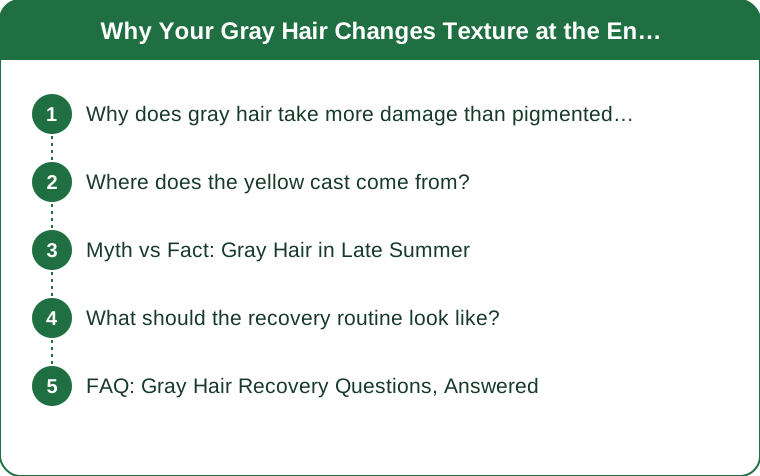
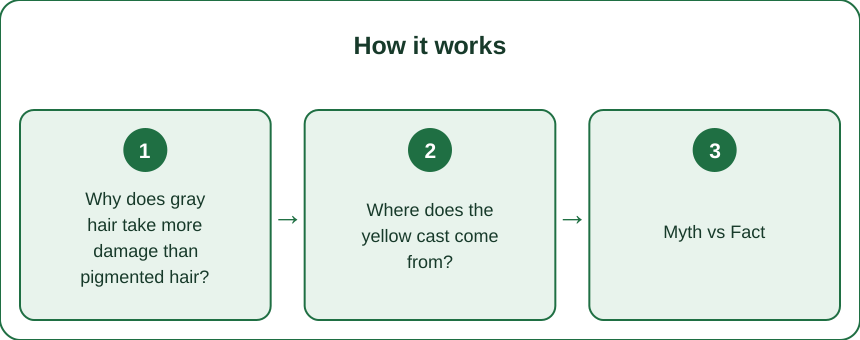
Why does gray hair take more damage than pigmented hair?
Because melanin was doing protective work that you no longer have.
Melanin is a pigment, but it is also a UV absorber. In pigmented hair, melanin granules absorb a meaningful share of incoming UV and dissipate it as heat before it reaches the keratin protein structure of the cortex.
Gray and white hair have dramatically reduced melanin. The same sun exposure delivers more UV energy to the protein structure, which degrades the keratin and the disulfide bonds that give hair its strength and elasticity.
The practical consequence is that a summer that leaves pigmented hair slightly dry can leave gray hair genuinely damaged - more porous, more brittle, and rougher in feel.
Gray hair also tends to have a different cuticle behavior. The cuticle layer is often less tightly packed, which is part of why gray hair reads as coarser and why it is more prone to frizz. Summer damage raises the cuticle further, and raised cuticle is exactly what your fingers register as rough.
And there is a third factor. Sebum production declines with age, and sebum is the hair’s own conditioner traveling down the shaft. Less natural lubrication plus more UV damage plus a raised cuticle is the whole late-August story in one sentence.
Where does the yellow cast come from?
Three separate sources, and they need different treatments.
Mineral deposits from water. Hard water leaves calcium and magnesium on the shaft, and iron in well water or older plumbing deposits as a yellow-orange stain that porous gray hair holds onto readily. This is the most common cause and the one people misdiagnose most often.
Chlorine and pool chemistry. Chlorine itself is drying, but the yellow-green tint from pools is usually copper, from copper-based algaecides or from copper plumbing, oxidizing and binding to the hair. Porous hair binds more of it, which is why gray hair shows it first.
Product and environmental buildup, including sunscreen residue, styling products and pollution, all of which yellow over time.
The treatments differ. A chelating or clarifying shampoo removes mineral and metal deposits - this is the one that works for hard water and pool yellowing, and it is what most people should try first. A purple shampoo does not remove anything; it deposits violet pigment to visually neutralize yellow, which works well for a warm cast in the hair itself but does nothing for mineral staining.
Using purple shampoo on mineral-stained hair is the most common late-summer mistake. It over-deposits, leaving a dull lavender-grey, while the actual deposit is still there. Chelate first, then assess whether you still need to tone.

Myth vs Fact: Gray Hair in Late Summer
Myth: Gray hair is coarser than pigmented hair. Fact: Gray hair is frequently finer in diameter, not coarser. What reads as coarse is the surface texture from a less-compacted cuticle and reduced sebum, plus a different growth pattern that can make individual strands wirier. Treating it as coarse hair with heavy products often weighs it down without addressing the actual issue.
Myth: Purple shampoo is a weekly maintenance product. Fact: Overuse is the leading cause of dull, muddy silver. Every second or third wash at most, and less if the hair is porous - porous hair grabs pigment fast and releases it slowly. If your silver has gone flat, stop the purple shampoo for three weeks before doing anything else.
Myth: Damage from the summer will grow out and there is nothing to do. Fact: The cuticle can be substantially smoothed and the protein-moisture balance restored. It will not repair the hair to new, but the feel and the frizz respond within a few weeks to the right routine.
Myth: Gray hair does not need heat protection because there is no color to fade. Fact: Heat damages protein, and gray hair has less structural buffer against it. Yellowing from heat damage is a real and common phenomenon - repeated high-heat styling literally scorches the protein, and the result is a warm cast no toner will fix.
What should the recovery routine look like?
Chelate, then rebalance protein and moisture over four to six weeks.
Week one: clarify properly. A chelating shampoo, used once. This removes mineral, copper and product buildup and gives you an honest baseline. Do not judge your hair color or texture until after this step - a lot of what people diagnose as damage is deposit.
Then alternate protein and moisture. Damaged hair needs both, and the common failure is doing only one. Protein treatments rebuild the structure but used alone make hair stiff and brittle. Moisture treatments soften but used alone on damaged hair make it mushy and over-elastic.
A workable rhythm: a protein treatment every second or third wash for three weeks, with a rich moisture mask in between, then reassess. If the hair feels stiff and snaps, you have too much protein - go moisture only for two weeks. If it feels limp and stretches before breaking, add protein.
Lower the heat. Every degree matters more on gray hair. If you use heat, a lower setting with a heat protectant, and accept it will take longer.
And add a leave-in. Reduced sebum means the shaft is not being conditioned from the root, and a lightweight leave-in conditioner or oil applied mid-length to ends replaces that function directly. This is the single highest-return daily habit for gray hair and the one most often skipped.
FAQ: Gray Hair Recovery Questions, Answered
How long until it feels normal again?
Four to six weeks of consistent protein-moisture balancing produces most of the improvement you are going to get from the existing hair. Sun-damaged sections near the ends may need to be trimmed rather than treated. New growth arriving from now on will be undamaged, so the overall picture improves steadily through autumn.
Can I prevent this next summer?
Largely, yes. A UV protectant spray for hair, a hat on high-exposure days, and rinsing with fresh water immediately after swimming - before the chlorine and copper dry onto the shaft - prevent most of it. Wetting your hair with clean water before entering a pool also works, because saturated hair absorbs less pool water.
Is a purple conditioner better than a purple shampoo?
Generally yes for gray and silver hair, because the deposit is gentler and more even, and conditioners do not carry the stripping surfactants. If you are prone to over-toning, switching from shampoo to conditioner as your toning product is a simple and effective fix.
TL;DR:
- Melanin absorbs UV, and gray hair does not have it - the same sun does more protein damage.
- Yellowing is usually mineral or copper deposit, not pigment - chelate before you tone.
- Purple shampoo deposits, it does not remove. Overuse causes the dull muddy silver people blame on damage.
- Alternate protein and moisture for four to six weeks; doing only one makes things worse in a different direction.
- Reduced sebum with age means a leave-in is doing a job your scalp no longer does.
- Rinse with fresh water immediately after swimming, and pre-wet before you get in.
The hair is not permanently changed. It had the hardest three months of its year and it responds to being rebalanced.
Keep Reading
This article is for general informational and styling purposes only. Fit, sizing, and product availability may vary.