Why Gray Hair Frizzes at the Crown First and Everywhere Else Second
Quick Answer: The crown frizzes first because it receives the most UV exposure, the most friction from pillows, hats, and hands, and it is usually where gray growth is densest - and gray strands have a different cuticle structure, less natural pigment protection, and often a coarser, more wiry texture. The fixes that work are UV protection, a leave-in with weight targeted at the crown specifically, sleeping on silk or satin, and avoiding the temptation to over-brush an area that is already mechanically stressed.
The lengths behave. The ends are fine. There is a halo at the crown doing its own thing.
That halo has three separate causes and they compound.
What makes gray hair frizz differently in the first place?
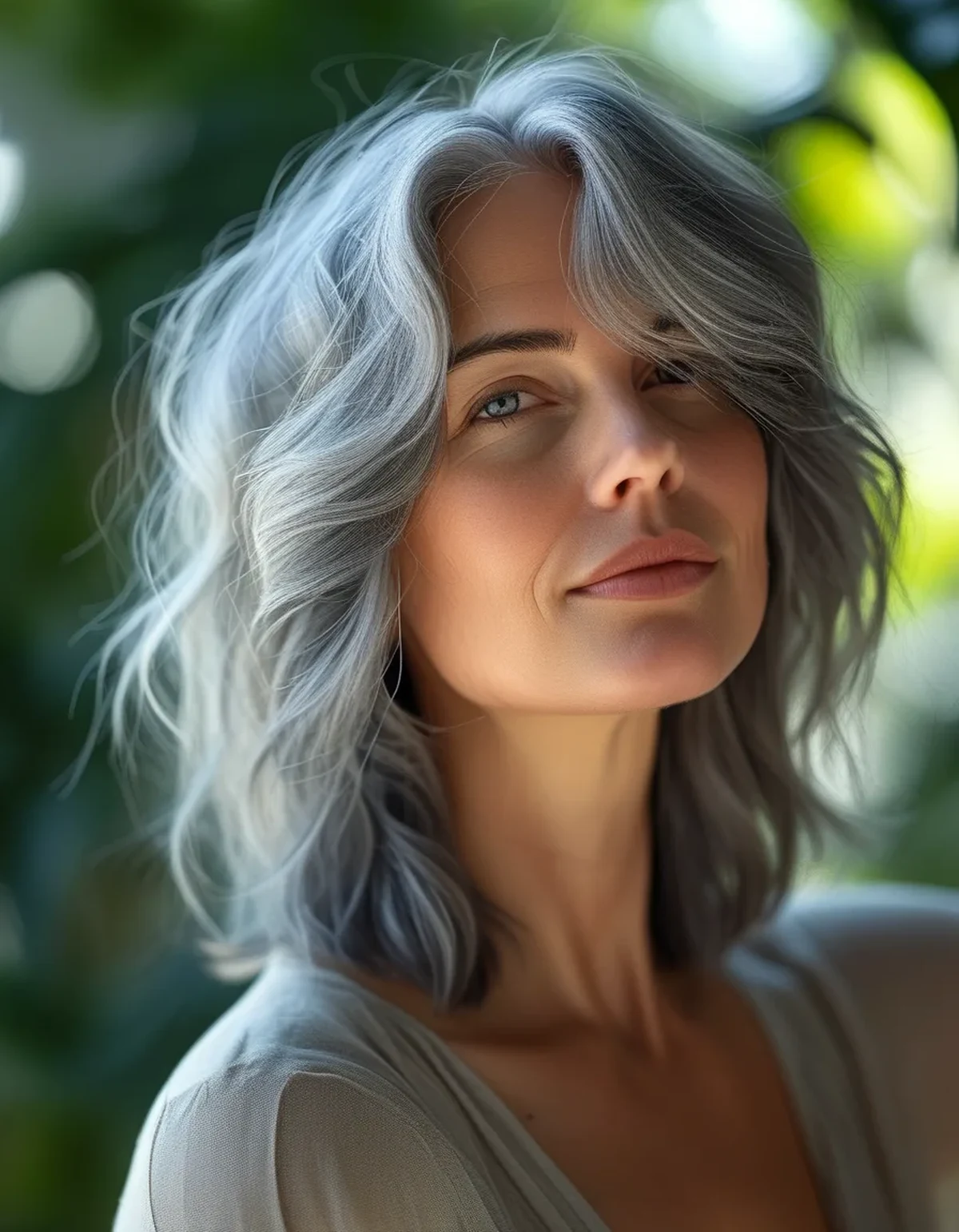
Gray hair frequently has a different texture than the pigmented hair it replaced - often coarser, drier-feeling, and with more of a natural bend or kink to the strand.
The cuticle tends to sit less smoothly, which means light scatters rather than reflecting evenly and individual strands catch on each other instead of lying flat.
Loss of melanin removes a degree of natural protection. Melanin absorbs some UV, so unpigmented hair is more exposed to sun damage than pigmented hair in the same conditions.
Sebum distribution changes with age too, and scalp oil production commonly declines - so less natural conditioning reaches the mid-lengths, which is why gray hair often feels drier even when nothing about the routine changed.
Individual gray strands are frequently a slightly different diameter, and a mixed-diameter head of hair does not lie together as smoothly as a uniform one does.
None of this makes gray hair worse, but it does mean the routine that worked at 35 is genuinely under-conditioning at 50, which is the most common cause of the frizz appearing to arrive suddenly.
Why the crown specifically?
UV exposure is highest at the crown by a large margin. It is the part of your head pointed at the sky all day, and cumulative sun damage lifts the cuticle and weakens the strand.
Friction concentrates there too. Pillow contact, hat brims, headbands, sunglasses pushed up, and the reflexive habit of running a hand over the top of the head all abrade the same square inches.
Regrowth is usually most visible at the crown and the parting, so the highest density of new, short, coarse gray strands is exactly where the mechanical stress is worst.
Short new growth cannot lie flat. A three-centimetre strand has no weight to pull it down, so it stands up and reads as frizz even when the hair itself is in good condition.
Heat styling concentrates at the crown as well, because it is the area people work on hardest to get volume or to flatten a cowlick.
And parting the hair in the same place for years compounds all of it, which is why moving the parting slightly is one of the more effective interventions available for a fraction of the effort of a new routine.
What actually helps
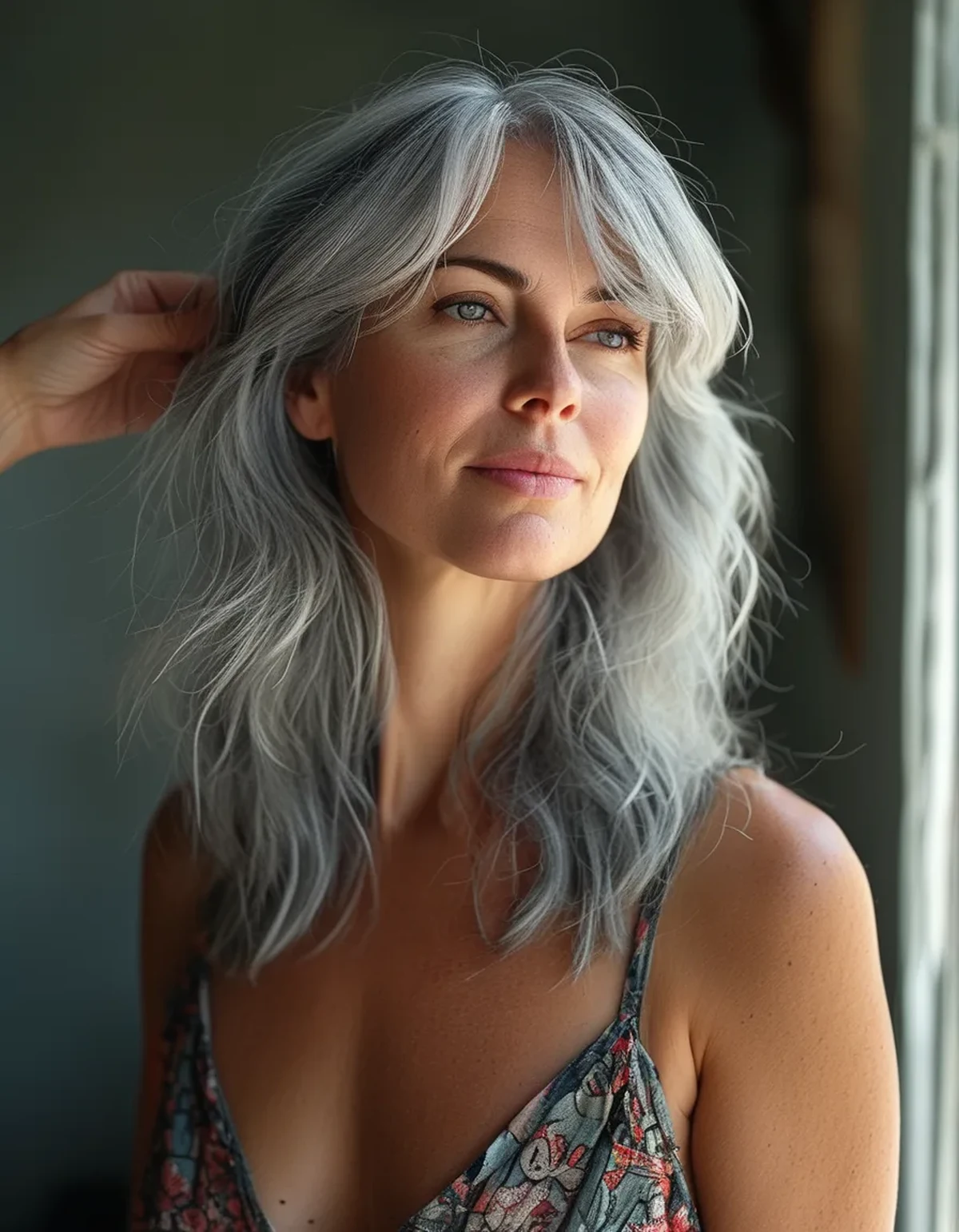
UV protection for hair is the underrated one. A leave-in with UV filters, or simply a hat on bright days, addresses the largest single cause and almost nobody does it.
Use a leave-in with some weight, applied to the crown specifically. Most people apply product to the lengths and ends where it is least needed, and skip the area that is actually dry.
Silk or satin pillowcases genuinely reduce overnight friction, and the crown and the side you sleep on are where you notice it. This is a low-effort change with a visible result within a fortnight.
Stop over-brushing the crown. Brushing an already-lifted cuticle creates more frizz, and the instinct to smooth it manually makes it worse over the course of a day.
Add a weekly deep conditioning treatment, focused on the top of the head. Gray hair generally needs more conditioning than pigmented hair and often gets the same amount.
Move the parting a centimetre every few weeks. It redistributes the mechanical stress and the sun exposure, and it also gives the crown some natural lift instead of a flat trained line.
And avoid purple shampoo on already-dry crown hair more than needed. It is excellent for tone and it is drying with overuse, and the crown is the area least able to afford that. Alternate with a plain moisturising shampoo.
Myth vs Fact: Gray Hair and Frizz
Myth: Gray hair is inherently frizzy. Fact: it is structurally different - often coarser with a less smooth cuticle and less sebum reaching it - which makes it more prone to frizz under the same conditions. The condition is manageable, not intrinsic.
Myth: Frizz means the hair is damaged. Fact: at the crown, much of it is short new growth with no weight to lie flat. That is regrowth, not damage, and it resolves as length increases.
Myth: More brushing smooths it. Fact: brushing an already-lifted cuticle increases frizz. The crown is the last place to brush repeatedly through the day.
Myth: Gray hair does not need sun protection because there is no colour to fade. Fact: unpigmented hair has less melanin protection and is more vulnerable to UV structural damage, not less. It also yellows with sun exposure.
Myth: Heavier products weigh gray hair down too much. Fact: gray hair often needs more weight than pigmented hair, and under-conditioning is far more common than over-conditioning. Apply to the crown, not just the ends.
Myth: Purple shampoo is a weekly essential. Fact: it corrects tone and is drying with frequent use. Alternate it with a moisturising shampoo, particularly if the crown is your problem area.
FAQ: Crown Frizz on Gray Hair, Answered
Why does my gray hair frizz at the crown but not elsewhere?
The crown gets the most UV exposure, the most friction from pillows, hats, and hands, and usually holds the densest new gray growth. Short new strands have no weight to lie flat, which reads as frizz.
Does gray hair really need sun protection?
Yes, more than pigmented hair. Melanin absorbs some UV, so unpigmented strands are more exposed to structural damage - and sun also causes yellowing.
Where should I apply leave-in product?
The crown and mid-lengths, not just the ends. Most people condition the area that needs it least and skip the driest part of the head entirely.
Do silk pillowcases actually help?
For friction-driven frizz, yes - and the crown and your sleeping side are where you see it. It is a low-effort change with a visible difference within about two weeks.
Should I brush the crown more to smooth it?
No. Brushing a lifted cuticle increases frizz. Move your parting occasionally instead, which redistributes both mechanical stress and sun exposure.
TL;DR:
- The crown frizzes first because it takes the most UV, the most friction, and holds the densest short new gray growth.
- Gray strands have a less smooth cuticle, less melanin protection, and often receive less sebum - so the old routine under-conditions them.
- Use UV protection or a hat, and apply leave-in to the crown rather than only the ends.
- Silk or satin pillowcases reduce overnight friction visibly within two weeks.
- Stop over-brushing the crown, move your parting every few weeks, and alternate purple shampoo with a moisturising one.
Much of what looks like damage at the crown is simply hair too short to lie down yet.
Keep Reading
This article is for general informational and styling purposes only. Fit, sizing, and product availability may vary.