Why Gray Hair Feels Coarser Than It Actually Is
Quick Answer: Gray hair usually is not thicker - it feels coarser because the cuticle sits differently, the strand holds less moisture, and without melanin it reflects light in a way that exaggerates every irregularity. Some strands do change diameter and curl pattern as follicles age, but the dominant experience of coarseness is surface texture and dryness, which respond well to conditioning, oils, and gentler heat.
The first few gray strands genuinely feel like different hair. You can find them by touch, which is not something anyone expects.
Is gray hair actually thicker?
Sometimes, but far less often than it feels.
The main change is pigment, not structure. Gray hair is hair whose follicle has stopped producing melanin. The keratin structure is largely the same; what is missing is the pigment that filled it.
Melanin occupied space inside the strand. Without it, the interior of the hair is less dense, which affects how the strand behaves - and, counterintuitively, can make it feel stiffer rather than softer.
Sebum production declines with age. The scalp produces less oil, which means less natural conditioning travels down the strand. Drier hair feels coarser regardless of its actual diameter, and this is probably the single largest contributor.
Curl pattern can genuinely change. As follicles age, some change shape, which alters how the strand grows. A previously straight hair growing with a slight bend or kink feels wiry, and this change is real - but it is a shape change, not a thickness change.
And the cuticle sits more raised. Gray strands commonly have a slightly more open cuticle, which increases friction between strands. That friction is what your fingers register as coarse.
Why does it look different as well as feel different?
Because pigment was doing optical work you never noticed until it left.
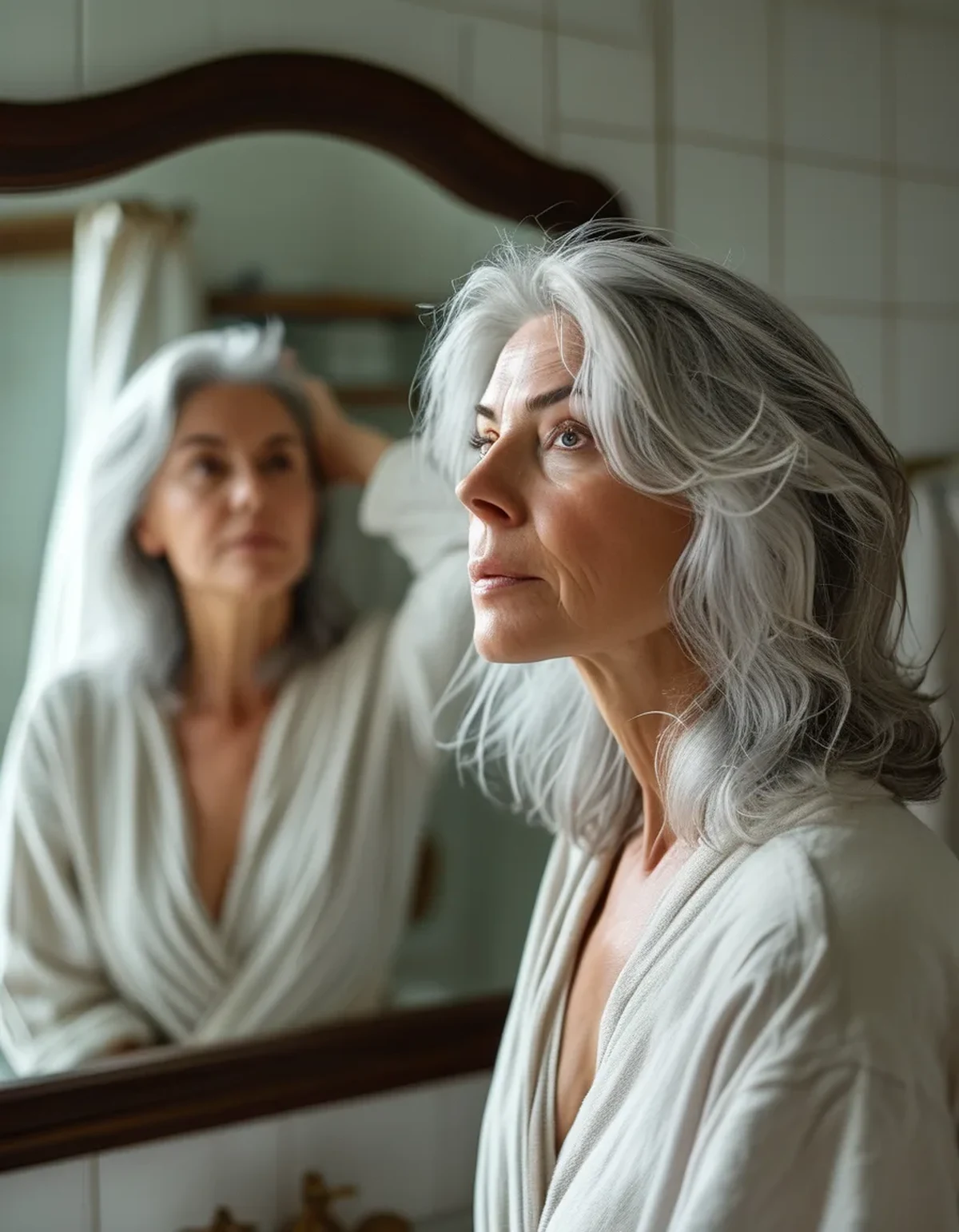
Melanin absorbed light; gray hair reflects it. Reflective strands show every bend, frizz, and irregularity that pigmented hair concealed. The same amount of frizz is far more visible in silver than in brown.
Gray catches surrounding color. Without pigment of its own, gray hair picks up tones from the environment - which is why it can look warmer under incandescent light and cooler under daylight or in autumn overcast.
It yellows from external sources. Sun, pollution, hard water minerals, chlorine, and residues from styling products all deposit and show clearly on an unpigmented strand. This is the origin of the brassiness that purple shampoos address.
Contrast makes early grays stand out. A few silver strands among dark hair are visually prominent in a way the same strands in blonde hair are not, which is why the early stage often feels more dramatic than the later one.
And texture reads differently in photos. Reflective hair photographs with more visible surface detail, especially in flash, which is a common source of the feeling that it looks worse than it did in the mirror.
What Nobody Tells You About Silver Hair Care
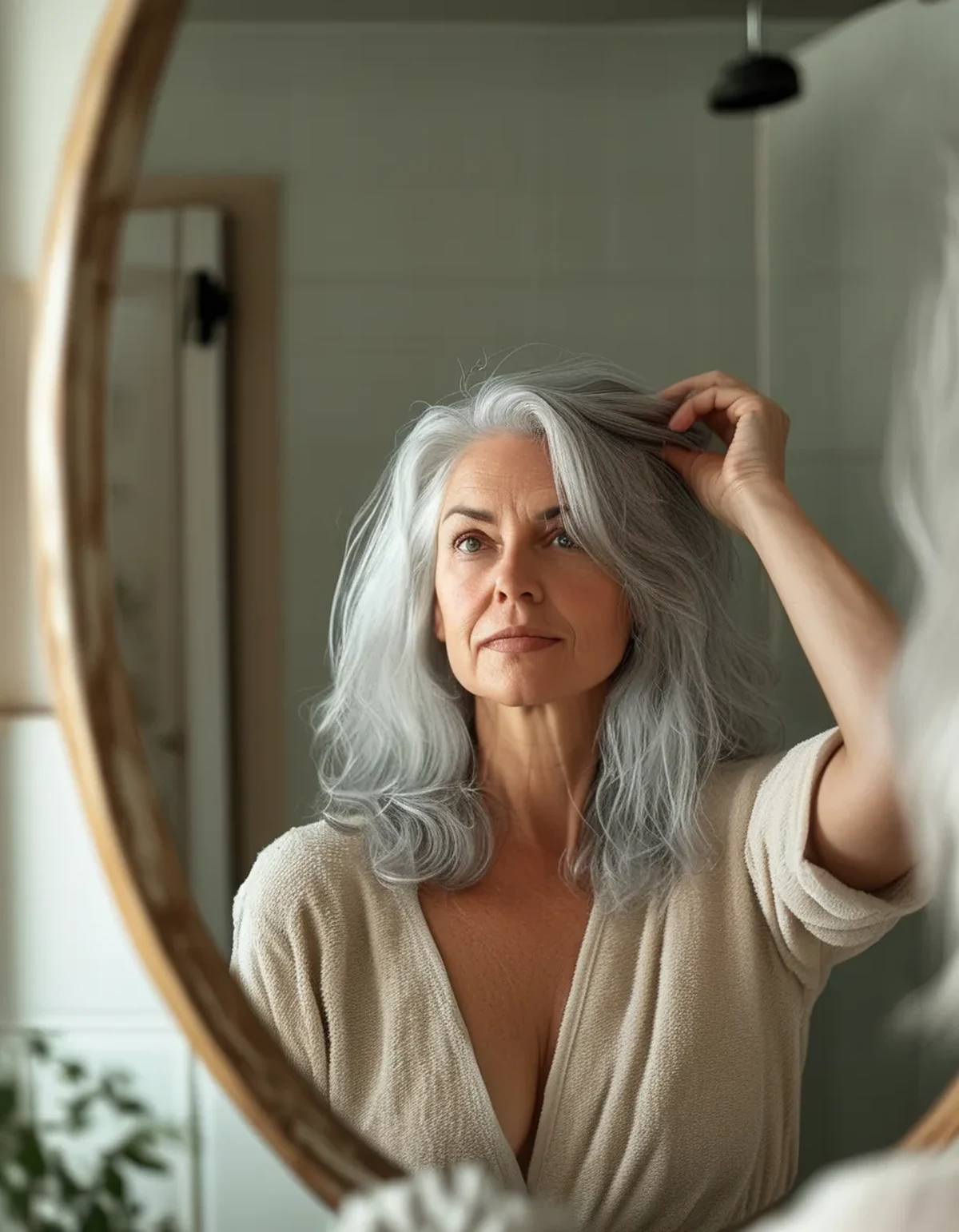
Conditioner matters more than shampoo. The core problem is moisture and cuticle smoothness. A rich conditioner or a weekly mask changes the feel of gray hair more than any specialist shampoo will.
Purple shampoo is easy to overuse. It deposits violet pigment to counteract yellow tones, and used too often it leaves a dull lilac cast. Once a week is plenty for most people, and following it with a normal conditioner prevents the dryness it can cause.
Hard water is a bigger factor than most people realize. Mineral deposits build up on unpigmented hair and produce dullness and a yellow tinge. A chelating or clarifying treatment once a month removes it, and a shower filter helps if your water is very hard.
Heat damage shows more. Without pigment to mask it, heat-damaged gray hair looks dry and straw-like quickly. Lowering styling temperature by 20 to 30 degrees and always using heat protection makes a visible difference within weeks.
Sun bleaches and yellows it. UV degrades hair proteins and shifts the tone on unpigmented strands. A hat or a UV-protective product genuinely matters after a summer, and late August is when the accumulated effect becomes obvious.
And a lightweight oil at the ends does more than a heavy serum. Argan, jojoba, or squalane on damp mid-lengths and ends smooths the cuticle and restores shine. Heavy silicone serums coat effectively but build up, and buildup on gray hair reads as dull rather than glossy.
Silk pillowcases actually help here. Reduced friction overnight matters more when the cuticle is already sitting more open.
Does this change seasonally?
Yes, and the late-summer-to-autumn transition is one of the two difficult points in the year.
A summer of sun leaves accumulated damage. UV exposure over June to August degrades the protein structure and shifts tone. The consequences become most visible in September, once you are no longer adding new sun-lightening to mask it.
Chlorine and salt build up over a swimming season. Both are harsh on unpigmented hair and both deposit minerals that dull the tone. A clarifying treatment at the end of summer is worth doing deliberately rather than waiting for the dullness to become obvious.
Humidity drops, and so does moisture retention. Autumn air pulls water from the hair faster, and hair that already produces less oil feels the change more. Switch to a richer conditioner in late summer rather than October.
Indoor heating is the next problem. Once heating starts, indoor humidity falls sharply, which is when most people notice the biggest change in how their hair feels. Preparing before it starts is far easier than repairing afterward.
And light changes how it reads. Autumn light is warmer and lower-angled, which brings out yellow tones on silver hair more than summer daylight does. Some people find their color looks different in September without anything having changed.
FAQ: Gray Hair Questions, Answered
Does plucking a gray hair make more grow back?
No. Each follicle produces one hair, and plucking one does not affect neighboring follicles. Repeated plucking can damage the follicle over time, though, which is a reason to leave them alone.
Why does my gray hair feel dry no matter what I use?
Usually a combination of reduced sebum, an open cuticle, and product buildup. Try clarifying once to remove buildup, then focus on a weekly deep conditioner and a light oil rather than adding more products.
Can gray hair be reversed?
Graying from age is not reversible with current evidence. There is research suggesting that graying associated with acute stress can partially reverse when the stress resolves, but this applies to a specific and limited situation.
Is gray hair more fragile?
It is not inherently weaker, but it is often drier and shows damage more visibly, which makes gentle handling and heat protection more important in practice.
TL;DR:
- Gray hair usually is not thicker - it feels coarse because of reduced sebum, a more open cuticle, and sometimes a changed curl pattern.
- Without melanin, strands reflect light and show every irregularity that pigment used to hide.
- Conditioning beats specialist shampoo; purple shampoo once a week is plenty, and clarifying monthly removes mineral dullness.
- End of summer is the moment to clarify, switch to a richer conditioner, and lower heat, before indoor heating starts.
The reframe worth keeping is that this is a surface problem more than a structural one, which is good news - surface problems respond to moisture, friction reduction, and gentler handling. Most people who conclude that their gray hair is impossible are treating it as a texture they cannot change, when the actual variable is how much water the strand is holding.
Keep Reading
This article is for general informational and styling purposes only. Fit, sizing, and product availability may vary.