What to Do When Your Eyebrows Start Going Gray
Quick Answer: Brows usually gray later than head hair but change the face faster, because they frame the eyes and provide most of the contrast in your face. Gray brow hairs also change texture - they grow coarser, straighter, and often in a different direction, which is why they suddenly stick out. Four options, in order of commitment: groom and shape only, fill with a pencil or powder one shade lighter than you think, tint at home or professionally every 3-4 weeks, or treat them as they are and rebalance the rest of your face. All four are legitimate, and the mistake most people make is going too dark.
The useful thing to understand first is that the texture change is doing as much of this as the colour change.
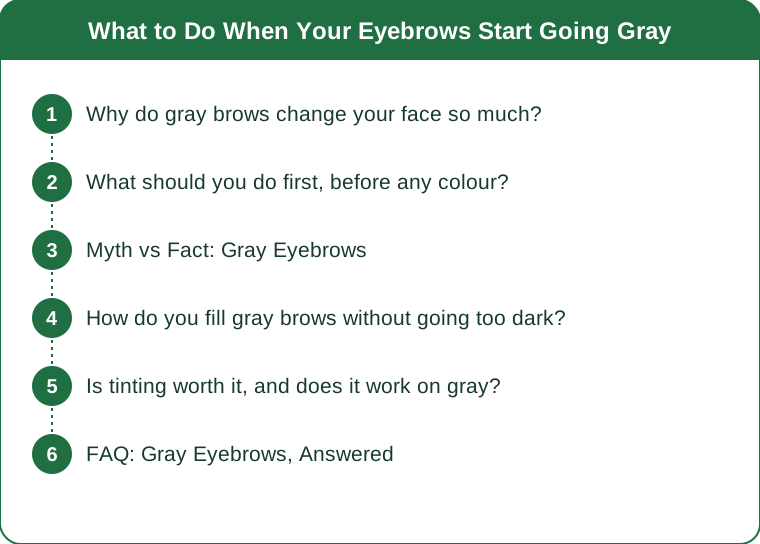
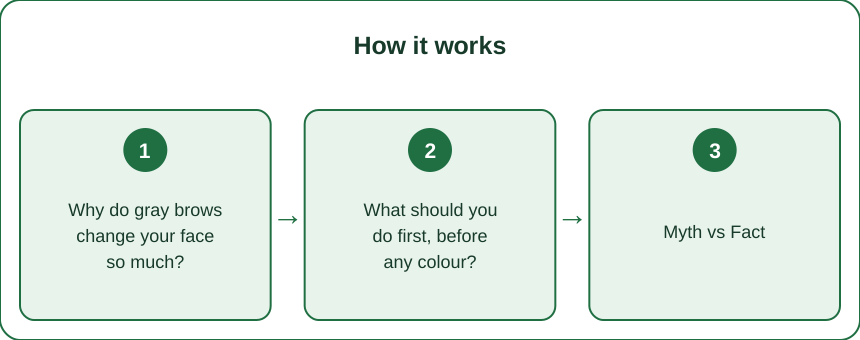
Why do gray brows change your face so much?
Because eyebrows do a disproportionate amount of work, and losing their colour removes contrast where the face needs it most.
Brows are the main source of contrast in the upper face. They define the eye socket, they carry expression, and they create the visual boundary between forehead and eye. When they lighten, the eyes appear smaller and the face appears flatter, even though nothing about the eyes has changed.
The effect is faster than head hair graying because there is so much less of it. A single gray streak in a head of hair is barely noticeable; a quarter of your brow going gray is immediately visible.
The texture change compounds it. Gray hairs across the body lose pigment and simultaneously change structure - the cuticle is different, the shaft is often thicker and less flexible. In a brow, that means hairs that grow straight out rather than lying flat, which is the wiry stray you find yourself pulling.
They also grow faster and longer. Gray brow hairs frequently outgrow the pigmented ones, which is why a brow that used to hold its shape starts looking untidy weeks after a trim.
The timing varies enormously. Some people gray at the brow before the temples; others keep dark brows a decade after their hair has fully silvered. There is no standard order and it is not a signal of anything.
What should you do first, before any colour?
Grooming, because it solves more of the problem than most people expect.
Trim the strays rather than plucking them. This is the single most important habit. Plucking a gray hair does not make more grow - that is a myth - but brow follicles get less reliable with age and a plucked hair in your fifties may simply not come back. Trimming costs you nothing.
How to trim: brush the brow upward with a spoolie, and snip only the hairs that stand above the natural line. Then brush down and check the lower edge. Small cuts, and stop earlier than you want to.
Brush them daily. Gray hairs are stiffer and grow in odd directions; a spoolie in the morning trains them and takes ten seconds.
Use a brow gel or soap. A clear setting gel holds the coarse hairs flat all day and instantly makes a gray brow look intentional rather than unruly. This alone fixes the untidy look for a lot of people, without any colour at all.
Consider shape before colour. As brows thin and lighten, the shape that suited you at 30 may be reading harshly now. A slightly fuller, softer shape reads younger and warmer than a thin defined arch, and a single professional shaping appointment is cheap and useful.
Myth vs Fact: Gray Eyebrows
Myth: Plucking one gray hair makes three grow back. Fact: Not physiologically possible - each follicle is independent. What is true is that plucked follicles may not regrow at all in later decades, which is a much better reason not to pluck.
Myth: You should dye your brows to match your hair colour. Fact: Brows should be one to two shades lighter than your hair, not matched. Matched brows read heavy and artificial, and this is the most common error in the whole category.
Myth: Gray brows mean you should stop wearing bold makeup. Fact: The opposite is often true. Losing brow contrast means the face needs contrast elsewhere - a defined lip or a stronger lash line rebalances it beautifully.
Myth: Brow gray is caused by a vitamin deficiency. Fact: In the overwhelming majority of cases it is age and genetics. Sudden, patchy, or rapid loss of pigment in brows or lashes is worth mentioning to a doctor, but gradual graying alongside your head hair is normal. This is general information, not medical advice.
Myth: Once they go gray, brows always thin out too. Fact: They often thin, but that is a separate age-related change and it happens on its own timeline. The two are unrelated processes and one does not predict the other.

How do you fill gray brows without going too dark?
The technique differs from filling pigmented brows in three specific ways.
Go lighter than your instinct. The most common mistake by a wide margin. Choose a shade one to two levels lighter than your hair, in a cool or neutral tone. Warm browns look orange against silver hair; taupe and cool ash tones are the ones that work.
Powder over pencil, for gray specifically. Pencil deposits on skin and reads as a drawn line, which is more visible against pale hairs. A brow powder with an angled brush sits between the hairs and creates the illusion of density rather than a drawn shape.
Tinted brow gel is the easiest option of all. It coats the hairs themselves rather than the skin, which is precisely what a gray brow needs - the hairs are there, they are just invisible. A tinted gel makes them visible again in about fifteen seconds, and it holds the coarse ones down at the same time.
Build in thin layers. Gray hairs take pigment unevenly and grab colour more than pigmented hairs do. One pass, assess in daylight, then a second if needed.
Check in natural light before you leave. Bathroom lighting hides heavy brows completely. The window test takes five seconds and it prevents the most common outcome, which is brows that look fine at the mirror and severe outdoors.
Is tinting worth it, and does it work on gray?
It works, with a caveat that matters.
Gray hair is resistant to colour because the cuticle is more compact and there is no pigment to build on. Brow tints on fully white hairs often grab less and fade faster - expect 2-3 weeks rather than the 4-6 you might get on pigmented brows.
Professional tinting is the low-effort route. A salon appointment takes about fifteen minutes and costs little. Always ask for one shade lighter than you think, and ask them to show you the colour before applying.
Home kits work and are inexpensive, but do a patch test 48 hours before - brow tint allergies are more common than people expect and a reaction near the eye is genuinely unpleasant. This matters more, not less, if you have tinted before without a problem; sensitisation develops over time.
Henna brow tint holds better on resistant gray hairs than standard tint and also stains the skin slightly, which adds the appearance of density. It lasts longer and it is the option worth asking about specifically if regular tint fades too fast.
Brow lamination is a separate service and it addresses the texture problem rather than the colour one - it sets the coarse strays flat for six weeks. For someone whose complaint is unruly rather than pale, that is the more targeted answer.
When to see a professional rather than treat it: patchy loss of pigment in the brows and lashes together, sudden onset, or brow hair loss alongside other changes is worth a doctor’s opinion rather than a tint. This is general information, not medical advice.
FAQ: Gray Eyebrows, Answered
Should I just let them go gray?
It is a completely valid choice and it looks striking with silver hair. If you go this route, invest in grooming and shape - a well-shaped, well-set gray brow reads deliberate; an untrimmed one reads neglected. And add contrast elsewhere: a defined lip or lash line does the work the brow used to do.
Why do my gray brow hairs stick straight out?
Texture change. Gray hairs are coarser, stiffer, and grow faster. A clear or tinted brow gel is the fix, and daily brushing trains them over weeks.
Can I use my head hair dye on my brows?
No. Hair dye is not formulated for use near the eyes and can cause serious irritation or injury. Use a product specifically made for brows.
What if only part of my brow is gray?
Very common - usually the inner third or the tail goes first. Tinted gel evens it out invisibly, and it is the least effort option for patchy graying.
Does the autumn light really make it more obvious?
Yes, noticeably. Lower-angle autumn sunlight is more directional and catches the coarse, lighter hairs, which is why a lot of people first notice their gray brows around this time of year rather than in flat summer light.
TL;DR:
- Gray brows change the face fast because brows carry most of the upper-face contrast - and the texture change matters as much as the colour.
- Trim, do not pluck. Follicles get less reliable with age and a plucked hair may not return.
- A brow gel fixes the untidy look on its own, before any colour is involved.
- Fill one to two shades lighter than your hair, cool or taupe tones, powder over pencil, checked in daylight.
- Tinted brow gel is the easiest option because it colours the hairs rather than the skin.
- Tint fades faster on gray - 2-3 weeks - and henna holds better. Always patch test.
The reason nobody warns you about this is that it happens quietly, and then one morning the light hits differently and you notice. Grooming solves most of it, and going lighter solves the rest.
Keep Reading
This article is for general informational and styling purposes only. Fit, sizing, and product availability may vary.