Silver Hair vs Gray Hair: Is There Actually a Difference?
Quick Answer: ‘Gray’ hair usually has warmer, more varied undertones and less shine, while true ‘silver’ hair reflects more light evenly and often looks cooler and more uniform. The difference comes down to how much melanin remains and how the strand’s surface reflects light.
You’ve heard your hair called both gray and silver, and honestly it changes depending on the light. That’s not you imagining it — the terms describe a real difference in pigment and shine, and most heads of graying hair are actually a mix of both.
What’s technically different about silver vs gray hair?
Hair color comes from melanin. As melanin production slows, strands lose pigment unevenly — some go fully clear (which reflects light as ‘silver’), others retain faint pigment (reading as ‘gray’).
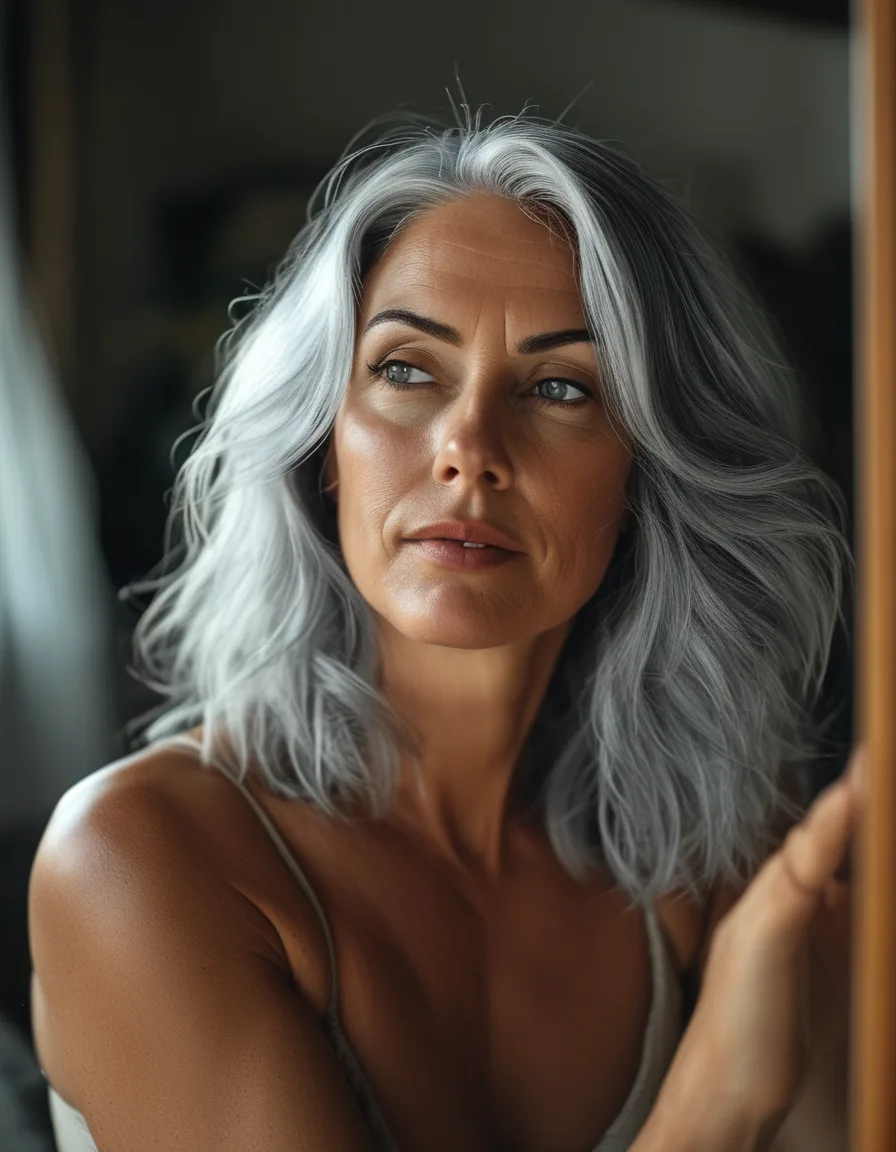
True silver strands have no pigment left, so they reflect light like a clear fiber, giving that bright, metallic look. Gray strands still carry a small amount of pigment, giving them a flatter, sometimes yellow-tinged appearance.
Why does silver hair look shinier than gray?
It’s a light physics thing, not a product difference. A pigment-free strand’s cuticle reflects light more directly and evenly, which reads to the eye as shine or shimmer.
Gray strands, with some remaining pigment and often coarser texture, scatter light more and can look duller — even with the same care routine as silver strands nearby.
What Nobody Tells You About the Gray-to-Silver Transition
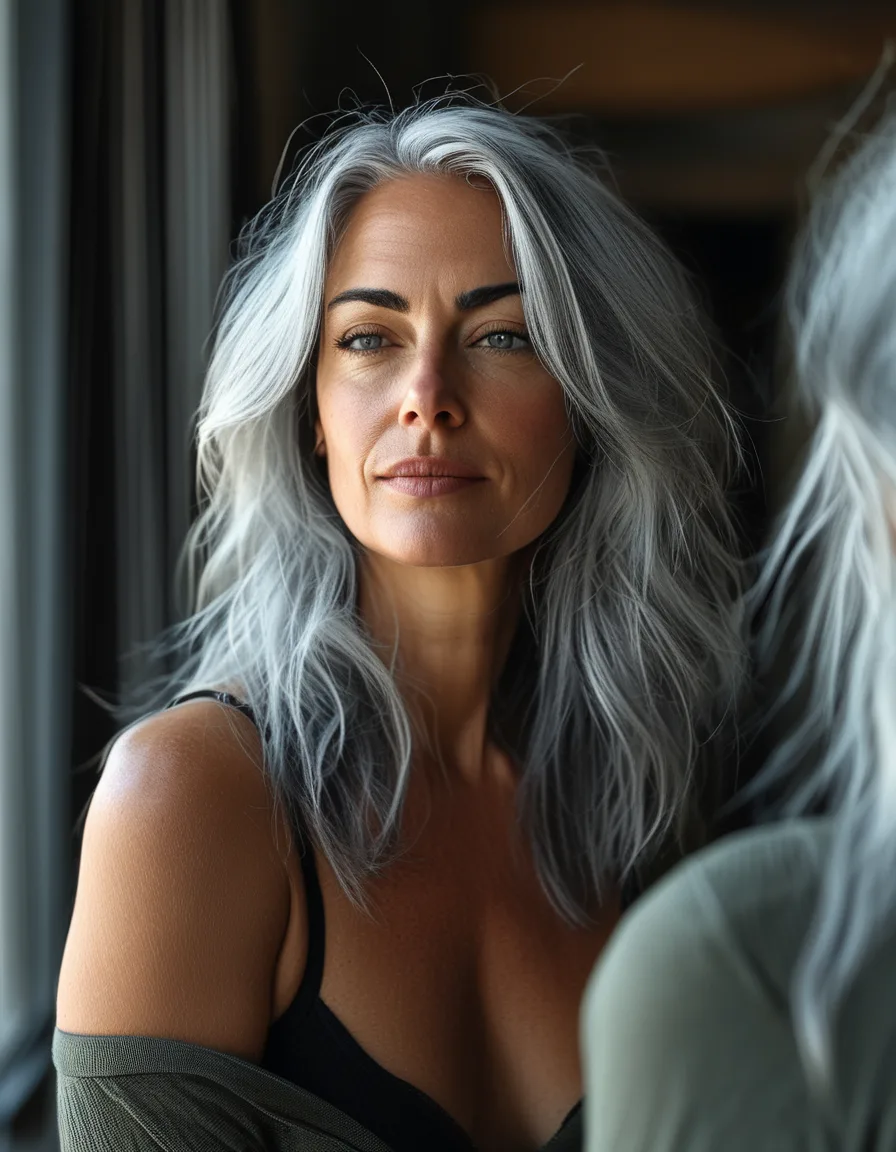
Almost nobody’s head goes gray uniformly. You’re very likely growing in a mix — some fully silver strands catching light, some gray-tan strands sitting flatter — which is exactly why the color seems to shift depending on lighting.
This mixed pattern is also why purple-toned (‘silver’) shampoos help: they specifically brighten the pigmented gray strands so they blend closer to the true-silver ones, evening out the overall look.
Can you make gray hair look more silver?
To a real degree, yes. Purple or blue-toned shampoo neutralizes the yellow undertone in pigmented gray strands, making the whole head read cooler and more uniform — closer to true silver.
A gloss treatment at the salon does the same thing with more lasting effect. Neither changes the actual pigment, but both change how light reflects off it.
FAQ: Silver vs Gray Hair Questions, Answered
Does hair texture change when it goes gray or silver?
Often yes — many people notice coarser, sometimes curlier texture as melanin production stops, unrelated to the silver/gray distinction itself.
Can you predict if your hair will go silver or gray?
Not precisely, but natural hair color is a hint: cooler natural tones often transition more silver, warmer tones more gray-yellow — though genetics vary a lot.
Do silver strands need different care than gray ones?
Both benefit from purple shampoo and added moisture, since pigment-free strands can be more porous and prone to dryness.
TL;DR:
- Silver strands have lost all pigment and reflect light more brightly; gray strands retain some
- Most heads are a mix of both, which is why color perception shifts with lighting
- Purple-toned shampoo brightens gray strands to blend closer to silver
- Texture changes (coarser, curlier) are common and separate from the silver/gray difference
Check a few strands in bright natural light — you’ll likely spot both types doing their own thing.
Keep Reading
This article is for general informational and styling purposes only. Fit, sizing, and product availability may vary.