Does a Vitamin Deficiency Cause Gray Hair? Separating Myth From Fact
Quick Answer: Genetics are the primary driver of when hair goes gray, and no vitamin reliably reverses established gray hair. However, deficiencies in vitamin B12, vitamin D, and copper have been linked in some studies to premature graying specifically, and correcting a genuine deficiency may slow further premature graying in those specific cases.
The idea that a vitamin can simply reverse gray hair is appealing and, unfortunately, mostly not how melanin production actually works — but the deficiency connection isn’t pure myth either.

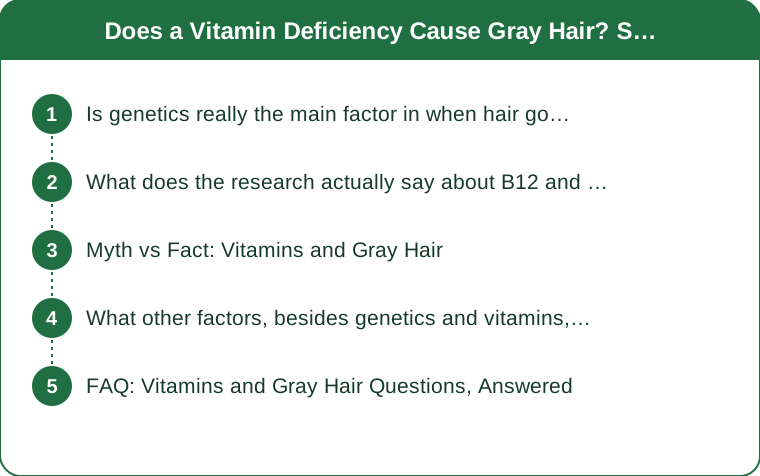
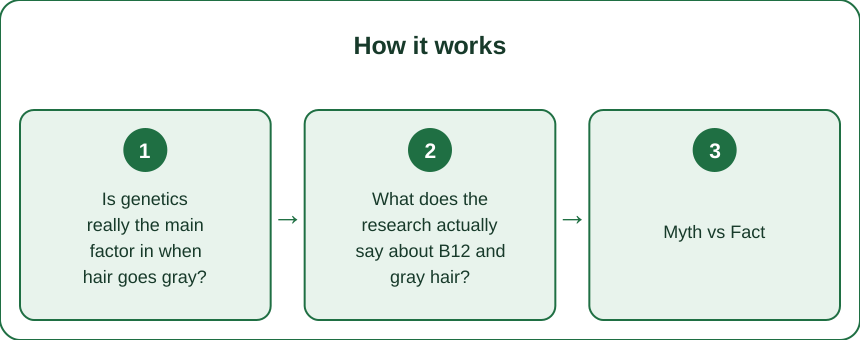
Is genetics really the main factor in when hair goes gray?
Yes — the age at which hair follicles stop producing melanin (the pigment behind hair color) is largely determined by genetics, which is why graying age often closely tracks a parent’s graying timeline. This baseline genetic timeline isn’t something a vitamin or supplement changes.
What does the research actually say about B12 and gray hair?
Several studies have found an association between vitamin B12 deficiency and premature graying, particularly in younger people graying earlier than their genetic timeline would predict. Correcting a diagnosed B12 deficiency in these cases has been associated with some reduction in further premature gray hair, though it’s not a reversal of hair that’s already gone gray.

Myth vs Fact: Vitamins and Gray Hair
Myth: Taking extra vitamins beyond a normal, sufficient level speeds up re-pigmentation. Fact: Once you have adequate levels of relevant nutrients, taking more doesn’t provide additional benefit — deficiency correction helps only if an actual deficiency exists.
Myth: Gray hair from vitamin deficiency always reverses once corrected. Fact: Some documented cases show partial re-pigmentation after correcting a significant deficiency, but this isn’t universal or guaranteed, and established genetic graying doesn’t reverse this way.
What other factors, besides genetics and vitamins, affect graying?
Smoking has one of the stronger evidence bases linking a lifestyle factor to earlier graying, likely through oxidative stress on hair follicles. Chronic stress has some mechanistic evidence (through stem cell depletion in hair follicles) but the effect size in humans is still being clarified. Thyroid conditions and certain autoimmune conditions are also linked to premature graying in some cases.
FAQ: Vitamins and Gray Hair Questions, Answered
Should I get my B12 and vitamin D levels tested if I’m graying early?
If graying started notably earlier than your family’s typical pattern, testing for B12, vitamin D, and thyroid function is a reasonable, low-cost step to rule out a correctable cause.
Can biotin supplements help with gray hair?
Biotin deficiency is genuinely rare and mainly linked to hair thinning and brittleness rather than graying specifically — there’s limited direct evidence connecting biotin supplementation to reversing or slowing gray hair.
Does stress actually turn hair gray overnight, like the popular stories suggest?
No — the biological process, even in stress-related cases, happens gradually as follicles cycle, not overnight; dramatic ‘gone gray overnight’ stories are almost certainly describing a rapid unmasking of already-gray hairs as pigmented hairs shed, not instant graying.
TL;DR:
- Genetics primarily determine graying age — no supplement changes that baseline timeline
- B12, vitamin D, and copper deficiencies have real links to premature graying specifically
- Correcting a genuine deficiency may slow further premature graying, not reverse existing gray hair
- Smoking has some of the strongest lifestyle evidence linking to earlier graying
If premature graying runs notably ahead of your family pattern, a simple blood panel is worth it — this is general information, not medical advice.
Keep Reading
This article is for general informational and styling purposes only. Fit, sizing, and product availability may vary.