Growing Out Gray Hair: The Transition Phase Nobody Prepares You For
Quick Answer: The transition phase — visible regrowth against dyed or non-gray ends — typically lasts 6-18 months depending on hair growth rate and how much length you’re willing to cut along the way. Strategic highlights, a shorter cut, and specific parting techniques all shorten how awkward it feels.
Most people underestimate the transition timeline and get discouraged around month 3-4, right when the line of demarcation is most visible and least styled-around yet.

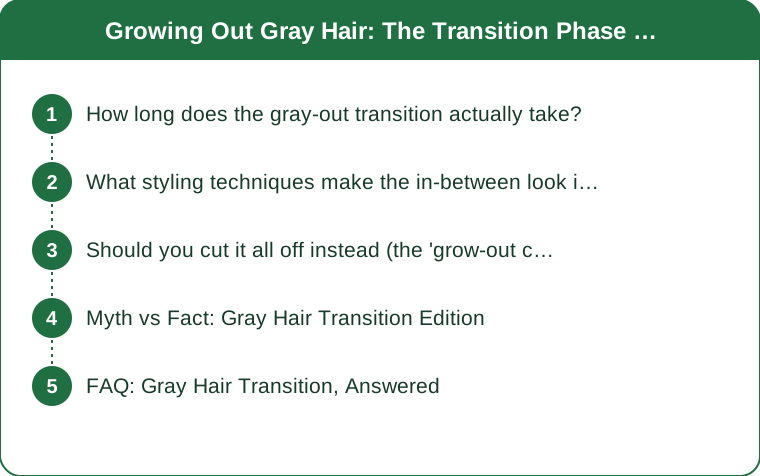
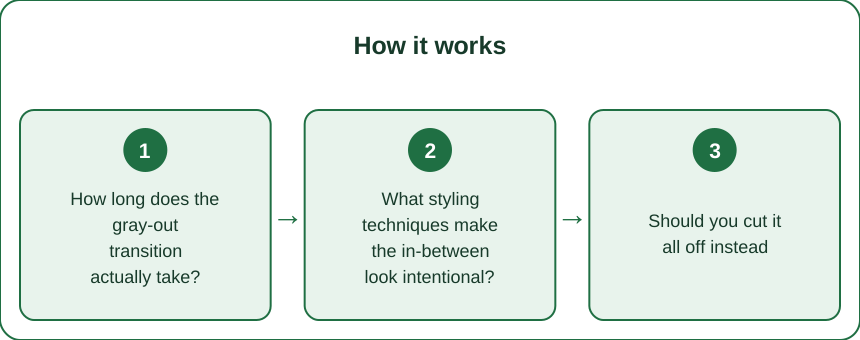
How long does the gray-out transition actually take?
Hair grows roughly half an inch per month, so a full transition from root to end — if you’re not cutting along the way — takes 12-18 months for shoulder-length hair. Cutting shorter periodically, or starting with a shorter cut, shortens this considerably, sometimes to 6-9 months.
The timeline is the single biggest reason people quit partway through — it’s genuinely long, and month 3-4 (the most visible contrast point) is not the worst it gets, but it feels that way emotionally.
What styling techniques make the in-between look intentional?
Blending highlights (lowlights and highlights mixed near the part line) soften the line of demarcation and is the single most effective transition tool most stylists recommend. A deep side part or zigzag part distributes the regrowth line across a wider area instead of one obvious stripe down the center.
Texture and waves also help — sleek, straight styles show the demarcation line more starkly than looser, textured styles do.

Should you cut it all off instead (the ‘grow-out chop’)?
A shorter cut is the fastest route to a fully gray look, often achievable in 3-6 months instead of over a year, since there’s simply less dyed length to grow out. It’s a bigger single decision but skips the longest, most visible part of the gradual transition entirely.
This suits people who want to be done with the process versus those who’d rather ease into it gradually.
Myth vs Fact: Gray Hair Transition Edition
Myth: You have to choose between the chop and years of awkward regrowth. Fact: Blending highlights plus periodic trims is a genuine middle path that most stylists specialize in now — it’s a request, not an improvisation.
Myth: Gray hair is more coarse or unmanageable than pigmented hair. Fact: Gray hair often has a different texture (sometimes coarser, sometimes finer) due to changes in the hair follicle, but it’s not universally worse — many people find it holds curl differently rather than ‘badly.’
Myth: You need special gray-specific products immediately. Fact: Purple or silver shampoo helps manage yellowing in white-gray hair over time, but it’s a later-stage tool, not a day-one necessity.
FAQ: Gray Hair Transition, Answered
Will my gray hair texture stay the same as before?
Often it changes somewhat — commonly coarser or with less natural shine, since the follicle structure changes with the loss of pigment. A texture-appropriate conditioner routine helps.
Should I tell my colorist I’m transitioning, or just stop coloring?
Tell them — a planned blending strategy (lowlights, highlights) makes a real difference versus simply letting previous color grow out unmanaged.
At what point should I start using purple shampoo?
Once you have enough white-gray hair to show yellowing (usually a few months into significant regrowth), 1-2 times a week is a typical starting frequency.
TL;DR:
- The transition takes 12-18 months without cutting, 6-9 with periodic trims
- Blending highlights and a deep or zigzag part soften the visible demarcation line
- A shorter ‘grow-out chop’ skips the longest awkward phase entirely
- Purple shampoo becomes useful once white-gray hair starts showing, not from day one
Talk to your colorist about a blending strategy before month 3 hits — that’s when most people feel discouraged, and it’s exactly when a plan helps most.
Keep Reading
This article is for general informational and styling purposes only. Fit, sizing, and product availability may vary.