Styling Silver: Cuts, Products and the Texture Truth of Gray Hair
Quick Answer: Gray hair isn’t just a new color — it’s a coarser, drier material that needs different handling. The four things that matter: a precision cut every 8–10 weeks, deep moisture (weekly mask, leave-in, oil), purple shampoo about once a week to control brass, and shine work through gloss treatments and lower heat.
Gray hair arrives with a plot twist nobody mentions. It’s not just a new color — it’s a new material.
Coarser, drier, more porous, and with strong opinions about humidity. The products that worked for twenty years suddenly do nothing, and the styling that used to fall into place doesn’t.
Styling silver well means treating it as the fresh medium it is. The right cut and three products do most of the work.
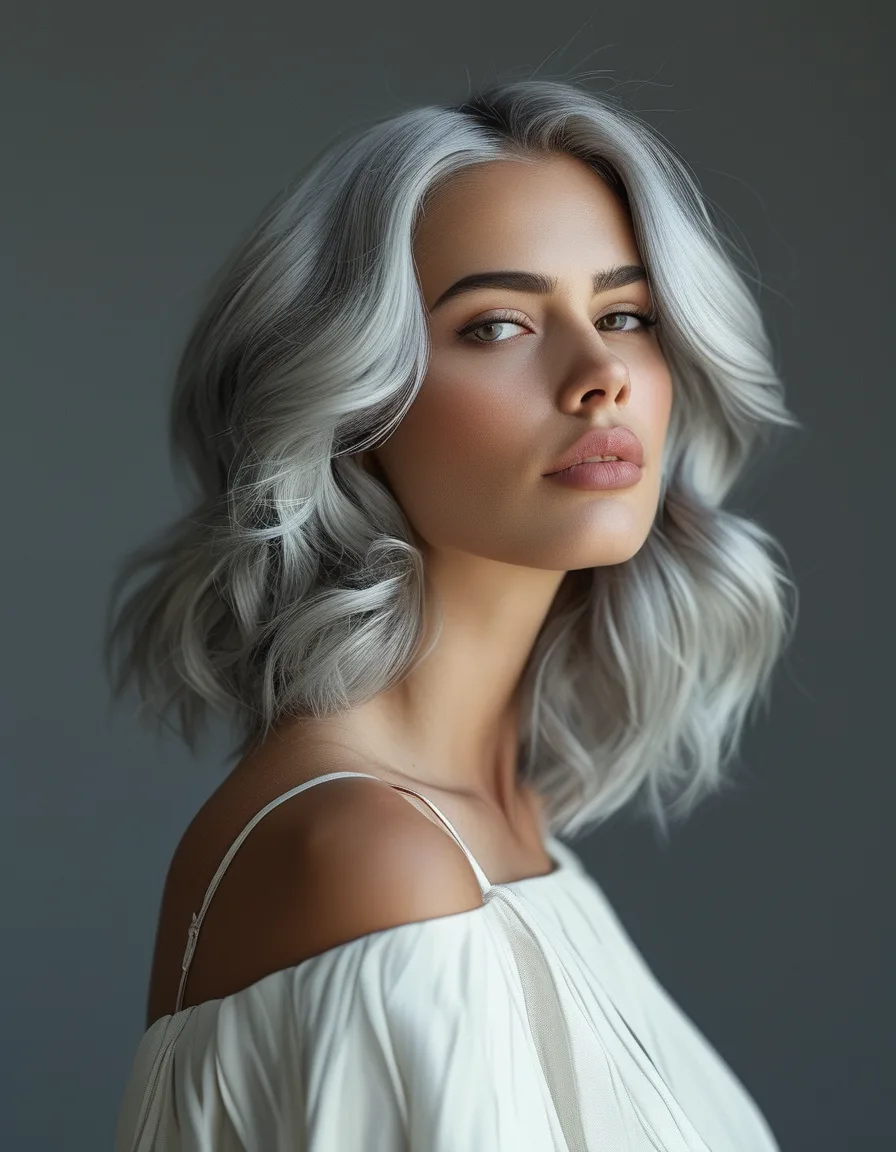
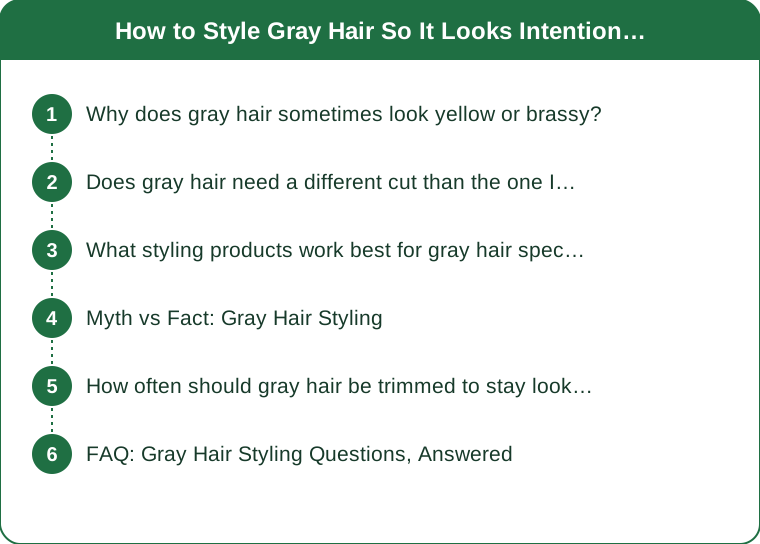
Why Does Gray Hair Feel So Different?
When melanin production stops, the hair’s internal structure changes with it. Gray strands are typically coarser and more wiry, the cuticle sits differently, and the scalp produces less sebum with age — so there’s less natural oil traveling down the shaft.
The practical result: gray hair is drier, more porous, frizzes more readily in humidity, and holds a style differently than it used to.
None of this is a problem. It’s a specification change, and once you style for the actual material rather than the remembered one, silver has genuine luxury potential.
What Haircut Suits Gray Hair Best?
Silver reads most intentional with structure.
Sharp bobs, deliberate pixies, well-maintained long layers, a strong blunt line — anything where the shape is clearly a decision. Because gray hair is coarser, it holds a defined shape better than it used to, which is an advantage worth using.
The grow-out shag era ends at the first real cut. Soft, undefined, in-between lengths are what make gray read as neglect rather than choice, and it’s almost entirely a shape issue rather than a color one.
A precision cut every 8–10 weeks is gray hair’s single best styling product. It costs less than the products people buy trying to compensate for a cut that’s grown out.
What Products Does Gray Hair Actually Need?
Three, and they move from optional to standard:
A weekly deep conditioning mask. 10–15 minutes, focused on mid-lengths and ends. This is the non-negotiable one.
A leave-in conditioner, applied to damp hair every wash. It’s the difference between softness and steel-wool texture through the day.
A hair oil — argan, marula, or a light silicone-based serum — on the ends. A few drops, not a handful.
Gray strands drink more and receive less oil from the scalp. Moisture is how you vote, and softness is what separates silver-chic from wiry.
One swap worth making: a sulfate-free shampoo, since gray hair strips more easily and takes longer to recover.
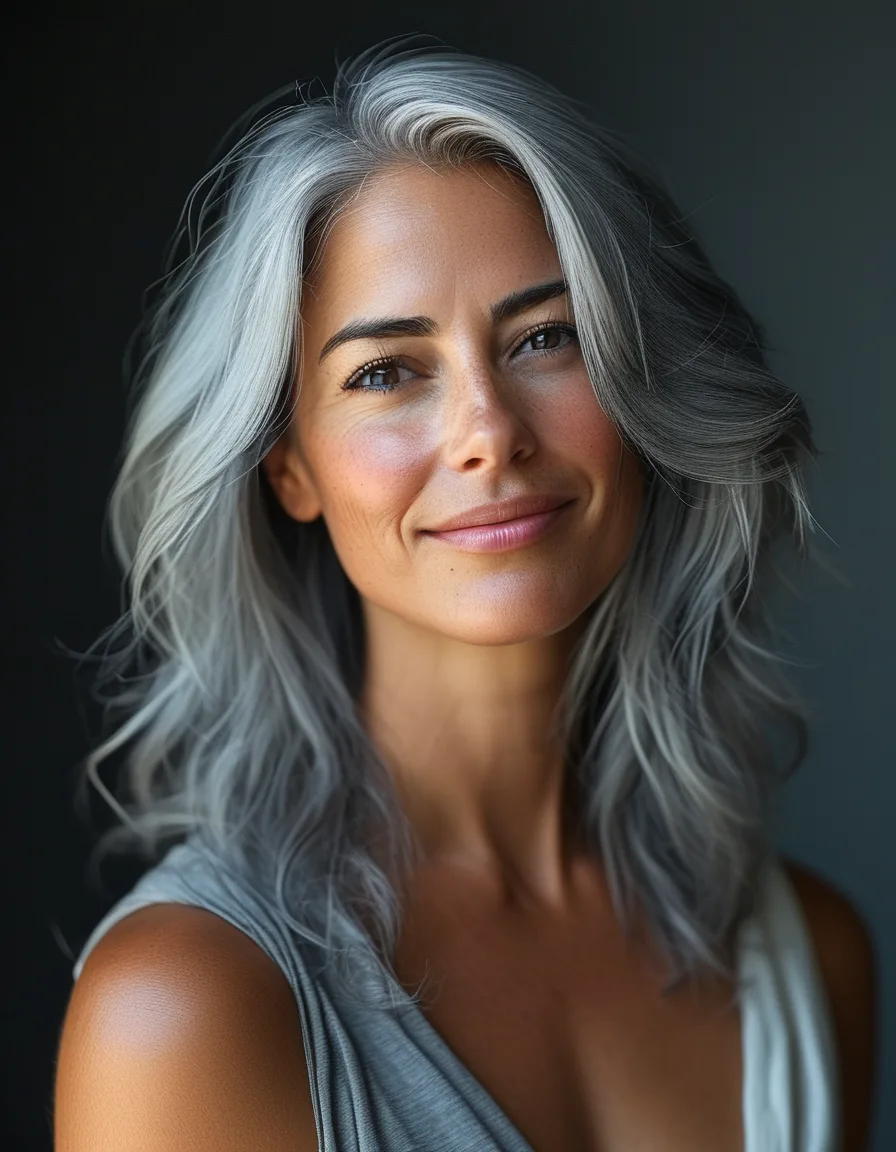
How Often Should You Use Purple Shampoo?
About once a week. Calibrated, not daily.
Purple shampoo deposits violet pigment that neutralizes the yellow tones that minerals in hard water, sun exposure, chlorine and product buildup leave behind on porous gray hair.
Over-use is a real and visible problem — daily purple shampoo casts a lavender or grey-mauve tint, especially on white hair, which is more porous and grabs pigment fast. Start at once a week, leave it on 2–3 minutes, and adjust from there.
Add a clarifying shampoo monthly to reset mineral buildup. If you have hard water, this one matters more than the purple.
Bright, cool silver is a maintenance schedule, not luck.
How Do You Get Gray Hair to Shine?
Gray’s coarser texture scatters light rather than reflecting it cleanly, so shine has to be coaxed rather than assumed.
- Gloss treatments, salon or at-home, every 6–8 weeks. The single biggest visible improvement available.
- Lower heat-styling temperatures — aim for 150–180°C (300–350°F) rather than the maximum. Silver shows scorch as yellowing, and that damage is permanent until it grows out.
- A silk or satin pillowcase, which genuinely earns its reputation on coarse, dry hair by reducing overnight friction.
- A cool-shot rinse at the end of a wash to lay the cuticle flat.
The “wow, your hair” compliments follow the shine, reliably.
Myth vs Fact
Myth: Gray hair means you can’t use color at all. Fact: Glosses, toners and demi-permanent color are used on gray constantly — for shine and tone rather than coverage. Going silver doesn’t mean giving up the colorist.
Myth: Plucking a gray makes three grow back. Fact: One follicle, one hair. Plucking repeatedly can damage the follicle over time, which is a reason not to do it — but the multiplication story is folklore.
Myth: Purple shampoo is a conditioner. Fact: It’s a toning product and most formulas are somewhat drying. Follow it with conditioner every time, and don’t let it replace your regular shampoo.
Myth: Gray hair grows more slowly. Fact: Growth rate isn’t the change; texture and density are. Hair does tend to thin with age, which is a separate process from graying and sometimes gets blamed on it.
When Should You See a Professional?
Worth a doctor’s visit if graying arrives with sudden or patchy hair loss, noticeable thinning over a short period, an itchy or flaking scalp that doesn’t respond to normal care, or if you’re going gray unusually early and have other symptoms — thyroid conditions and B12 deficiency can both play a role.
For the hair itself, a good colorist is worth one consultation even if you’re not coloring. Transition strategies, gloss options and cut advice for coarse silver are genuinely specialist knowledge.
Mini FAQ
How do I stop my gray hair looking yellow?
Weekly purple shampoo, monthly clarifying, a shower filter if your water is hard, and UV protection in summer — sun is a major yellowing culprit and few people account for it.
Does gray hair need different heat protection?
Same products, more consistently. Gray is more porous, so it takes up heat damage faster and shows it as yellowing rather than just breakage. Use heat protectant every time and keep the temperature down.
Will my gray hair get softer over time?
Not on its own, but consistent moisture makes a substantial difference within 4–6 weeks. The wiriness people describe is usually dryness rather than an unchangeable texture.
TL;DR:
- Gray hair is coarser, drier and more porous — style for the material, not the memory.
- Get a precision cut every 8–10 weeks; structure is what makes silver look deliberate.
- Weekly mask, daily leave-in, oil on the ends, sulfate-free shampoo.
- Purple shampoo about weekly (never daily), clarifying monthly.
- Gloss every 6–8 weeks, heat at 150–180°C max, silk pillowcase.
Sharp cut, deep moisture, calibrated purple, deliberate shine. Silver is a new material with luxury potential — style it like the upgrade it secretly is, and the compliments arrive on schedule.
Keep Reading
This article is for general informational and styling purposes only. Fit, sizing, and product availability may vary.