Why Gray Hair Photographs So Differently Than It Looks in the Mirror
Quick Answer: Gray hair looks yellow in photos because it has no melanin to absorb light — it reflects whatever color your light source is putting out. Warm indoor bulbs cast yellow, fluorescents cast flat blue-gray, and direct flash blows out the highlights. The fix: shoot near a window in daylight, set white balance manually instead of using auto, and avoid on-camera flash.
You checked the mirror before you left. Cool, even, exactly right. Someone takes a photo forty minutes later and your hair is yellow.
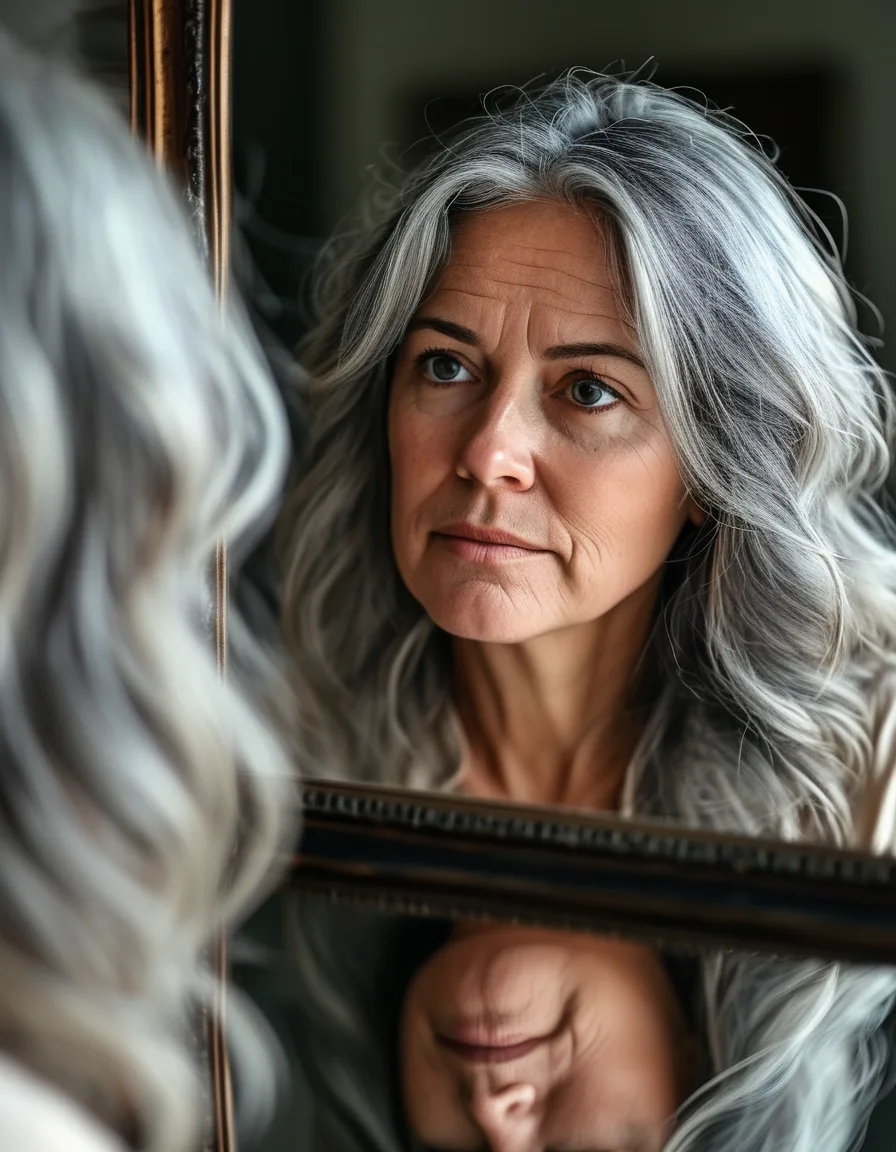
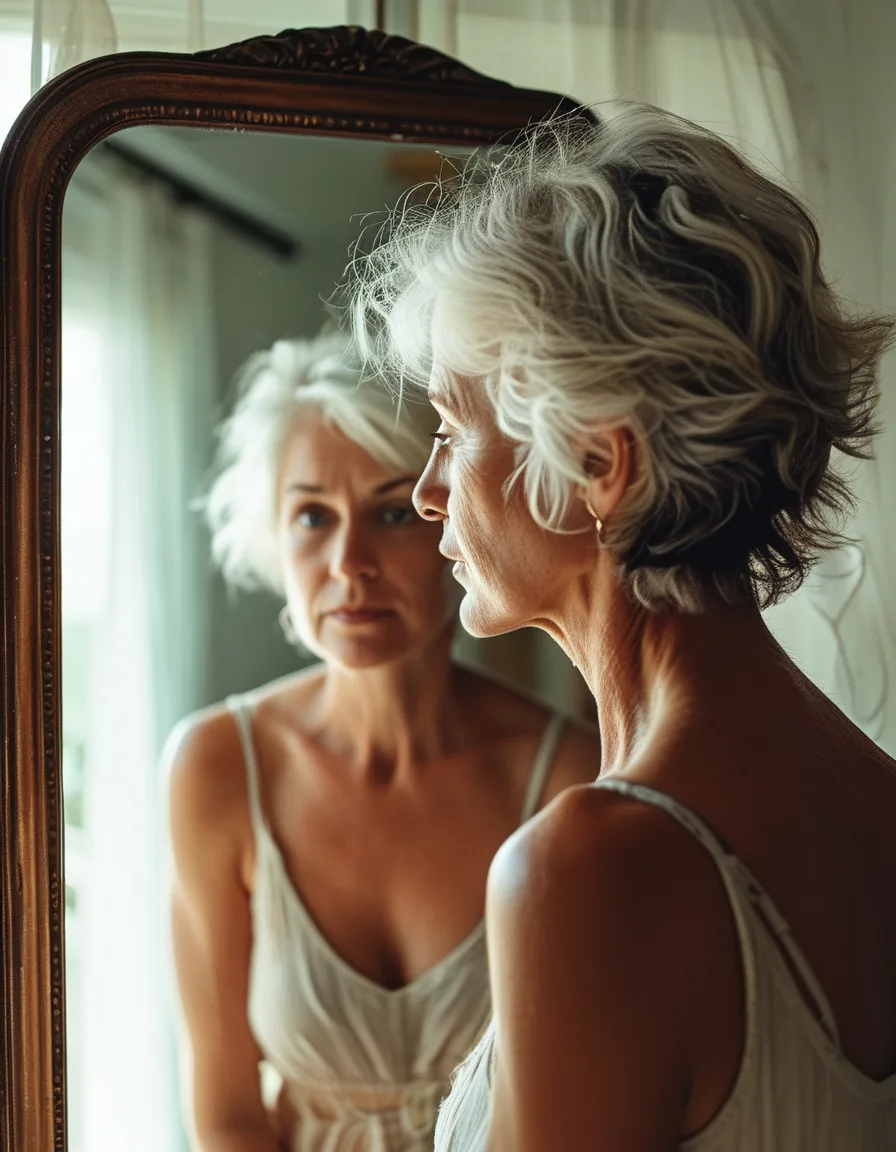
Both images are accurate. They were just lit differently, and gray hair is unusually honest about the light it’s standing in.
Why Does Gray Hair Pick Up Whatever Light Is Around It?
Pigmented hair contains melanin, which absorbs certain wavelengths and reflects the rest. That absorption is doing quiet color-correction work all day — it filters out a good portion of whatever cast the room’s lighting has, so brown hair looks brown under almost any bulb.
Gray and white hair have no melanin. There’s nothing absorbing anything, so the strand acts closer to a neutral reflective surface. It sends back a broad range of whatever’s hitting it. Warm bulb, warm hair. Cool bulb, cool hair.
Then a second thing goes wrong: your camera’s automatic white balance. Auto white balance looks at the whole scene, decides what “should” be neutral, and shifts every color accordingly. It’s calibrated around skin tones, walls, and clothing. A highly reflective, genuinely neutral patch of gray hair is an unusual input, and the algorithm frequently mis-corrects it — pushing it yellow when it compensates for a cool room, or blue when it compensates for a warm one.
The mirror doesn’t do any of this. Your eyes perform their own automatic correction, and they’re considerably better at it than a phone.
The Lighting That Distorts Gray Hair Most
Warm indoor bulbs — the yellow problem. Standard incandescent and “warm white” LEDs run around 2700K, which is genuinely orange light. On gray hair that reads as brassy yellow, and it’s the single most common complaint. Restaurant photos are the classic offender.
Fluorescent and cool LEDs — the flat problem. At the other extreme, office and bathroom fluorescents push a blue-green cast that makes silver look dull, gray-blue, and lifeless. It also flattens dimension, so hair that has lovely variation in person reads as one uniform slab.
Direct flash — the blown-out problem. This one is specific to gray. Flash creates hard specular highlights — bright mirror-like reflections — and gray hair’s reflectivity produces far more of them than pigmented hair does. You get sections that are pure white with no detail, sitting next to sections that are normal, which looks strange and slightly metallic.
Mixed lighting — the worst case. A window on one side and a warm lamp on the other means half your hair is cool and half is warm, and no white balance setting can fix both.
5 Mistakes Everyone Makes Photographing Gray Hair
1. Trusting auto white balance. It’s the root cause of most yellow-hair photos. Nearly every phone camera lets you tap-and-hold to lock exposure and color, and many have a manual white balance in Pro mode.
2. Using the flash indoors. It’s the fastest way to blow out silver. If the room is dark, move toward a window or a lamp and hold still instead.
3. Shooting under a ceiling light. Overhead light comes straight down onto the top of your head, which is where brassiness concentrates and where shadows land worst. Front-facing light is dramatically kinder.
4. Standing right against a colored wall. Reflected light is still light. A yellow wall throws yellow onto your hair from three feet away, and a green one is worse.
5. Never editing. A single temperature slider nudge toward blue in any phone photo editor fixes most yellow-cast gray-hair photos in about four seconds. This isn’t cheating; it’s undoing an error the camera made.
How to Get Photos That Match the Mirror
Shoot in daylight, near a window. Daylight around 5500K is the most neutral light most people can access, and it’s the closest match to what you saw in the mirror. Stand facing the window, not with it behind you.
Set white balance manually. On a phone, use Pro/Manual mode and pick the preset that matches the actual light source — “Daylight,” “Cloudy,” “Incandescent.” On a camera, do the same or shoot RAW and set it in editing. This alone solves the majority of the problem.
Use soft, diffused light. An overcast day is genuinely ideal. Indoors, bounce light off a wall or use a lampshade rather than a bare bulb.
Avoid direct flash. If you must have more light, add a second soft light source rather than firing a flash straight at yourself.
Check the histogram or just the photo. If the highlights in your hair are pure white with no texture, you’re overexposed. Drop exposure slightly and the detail comes back.
One reassuring note: if your hair looks yellow in every photo taken in every kind of light, that’s not the camera — that’s actual brassiness on the strand, and it responds to purple shampoo and a clarifying wash rather than to a white balance setting.
FAQ
Why does my gray hair look yellow in pictures but not in the mirror?
Because indoor bulbs are warm-toned and gray hair reflects that warmth directly, while your eyes automatically correct for it in real time and a camera’s auto white balance often doesn’t. Shoot near a window in daylight and the yellow usually disappears entirely.
What lighting is best for photographing gray hair?
Soft, natural daylight — an overcast day outdoors or indoors facing a large window. It’s neutral in color temperature and diffused enough to avoid the harsh specular highlights that make silver look blown out.
Can I fix yellow-looking gray hair in photo editing?
Yes, easily. Shift the temperature slider toward blue and, if your editor has it, reduce saturation slightly in the yellow channel. Most phone photo editors handle this in under a minute and the result looks natural.
TL;DR:
- Gray hair has no melanin, so it reflects whatever color the light source is.
- Warm bulbs cast yellow, fluorescents cast flat blue-gray, flash blows out highlights.
- Auto white balance frequently mis-corrects gray hair’s neutral reflectivity.
- Shoot facing a window in daylight and set white balance manually.
- A quick temperature nudge toward blue fixes most existing photos.
Keep Reading
This article is for general informational and styling purposes only. Fit, sizing, and product availability may vary.