Gray Hair Care: Why the Texture Changed and What It Wants Now
Quick Answer: Gray hair feels coarse and wiry because losing melanin changes the strand itself, not just its color — the fiber grows in with a different shape and a more open cuticle, while your scalp produces less oil at the same time. The result is a drier, more porous, thirstier strand. It needs gentler cleansing, far more conditioning, weekly purple toning, and less heat than your old routine gave it.
Same shampoo. Same brush. Same everything. And yet your hair now behaves like it belongs to someone else — wirier, drier, and doing a strange thing at the temples where it goes its own direction entirely.
You didn’t do anything wrong. The fiber genuinely changed, and it’s asking for a different routine.
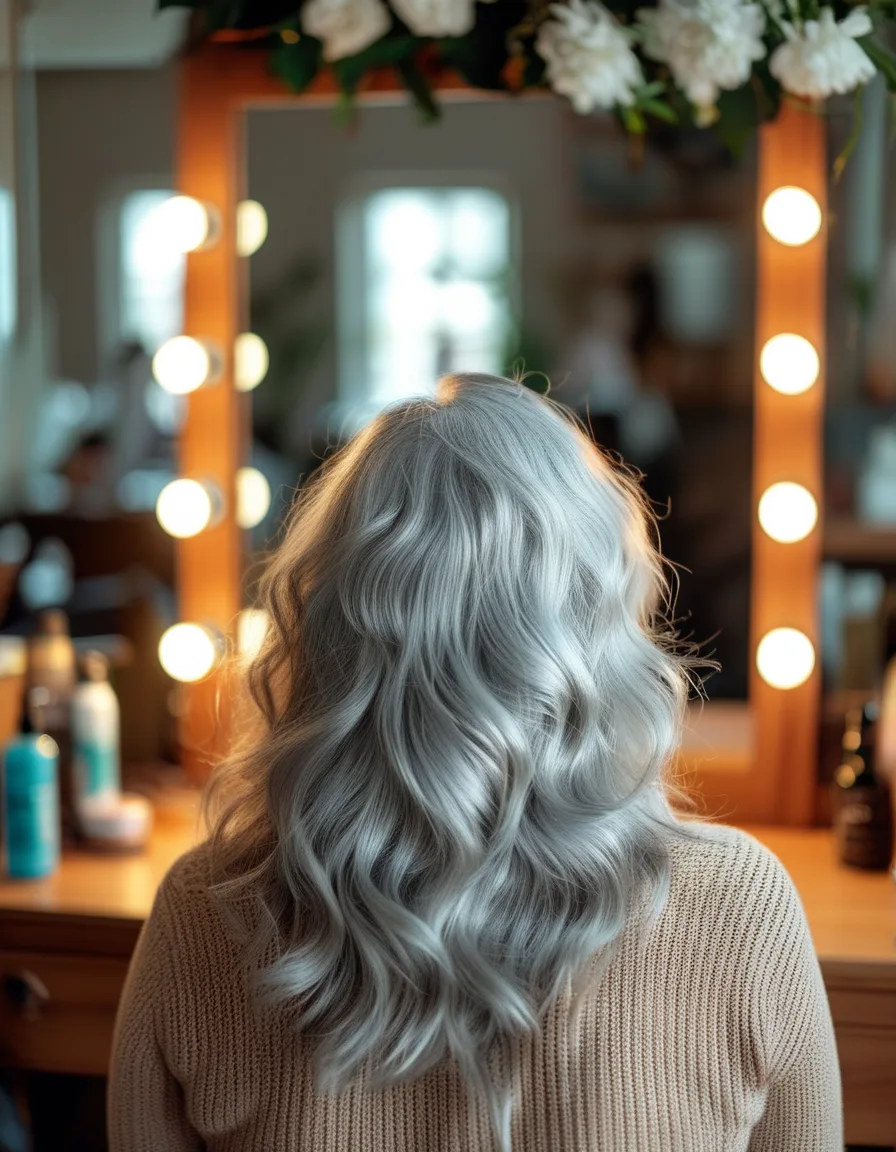
Why Is Gray Hair a Different Texture?
Three things happen at roughly the same time, and together they explain everything.
Melanin leaves — and it did more than color. Pigment granules occupied physical space inside the hair shaft and offered some UV protection. Without them, the strand is more porous and more sun-vulnerable. Porous hair loses moisture faster and absorbs whatever’s around it, which is why gray both dries out and stains.
Your scalp makes less oil. Sebum production declines with age independently of graying. So the strand is thirstier at exactly the moment its natural conditioner supply drops. It’s a supply-chain problem, not a personality flaw in your hair.
The follicle often changes shape. Many gray hairs grow in with a different cross-section than the pigmented hair they replaced, which is why so many people find their gray is coarser, wirier, or curlier — sometimes dramatically so at the hairline and temples where graying often starts.
Add it up: a drier, more porous, structurally different fiber. Your old routine wasn’t calibrated for that.
The Moisture Routine
Everything here is about putting moisture in and keeping it there.
Retire the sulfates. Harsh detergents strip the little oil the drier scalp still produces. A sulfate-free, gentle shampoo used 2–3 times a week — not daily — is the foundation. Rinse-only on other days is fine and encouraged.
Escalate the conditioning. Conditioner on every wash, mid-length to ends, plus a deep conditioning mask once a week left on 10–15 minutes. Gray hair rewards this more visibly than pigmented hair ever did — much of what reads as “wiry” is simply dehydrated, and it softens noticeably within a few weeks.
Add a leave-in and a little oil. A light leave-in for daily manageability, then 2–3 drops of oil worked through the ends only. This is what makes gray look deliberate rather than neglected — smooth ends read as styled, frizzy ones read as tired.
Turn the heat down. Heat damages a porous, unprotected fiber faster than it damaged your pigmented hair. If you use hot tools, stay at or below 300°F (150°C) and always use a heat protectant. Heatless styling — braids, rollers, air-dry with a leave-in — pays double on silver.
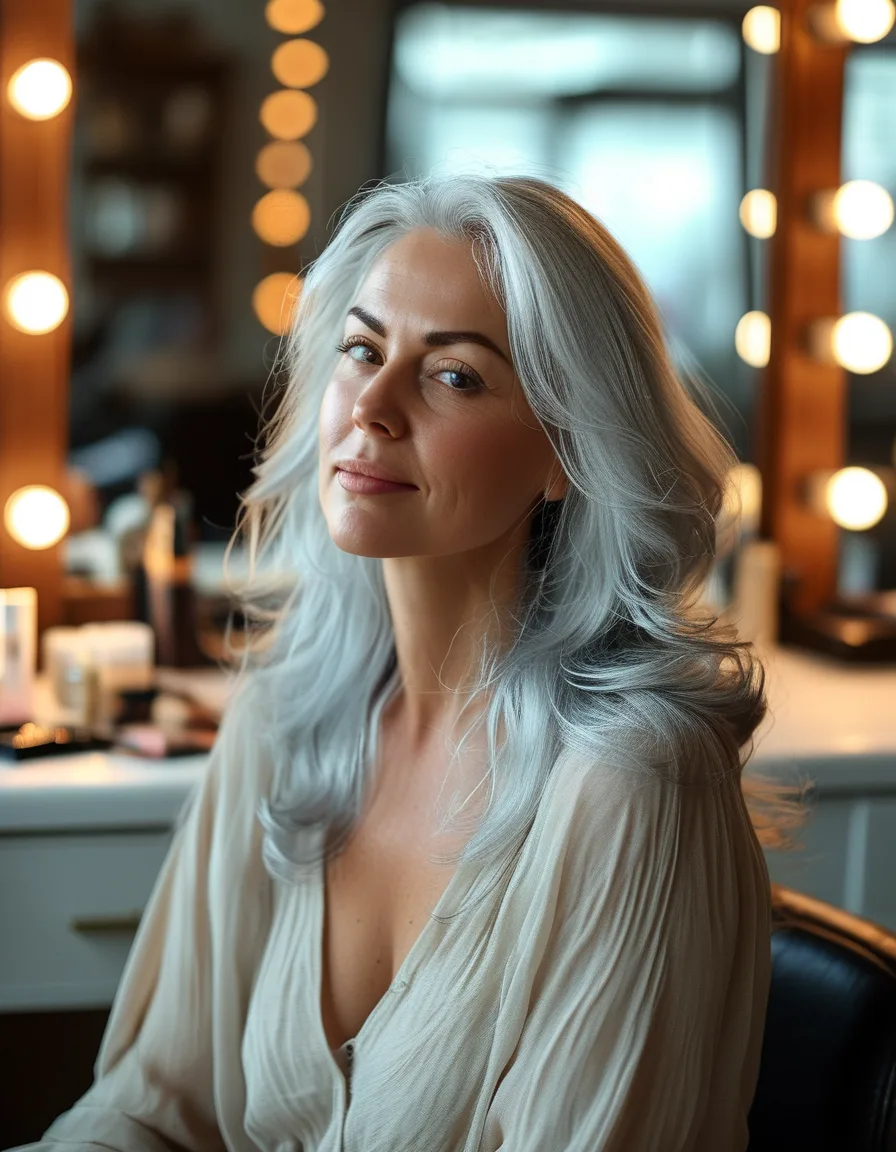
Myth vs Fact: Gray Hair
Myth: Gray hair is dead and can’t be improved. Fact: All hair is technically non-living, and all of it responds to conditioning, protein, and cuticle-smoothing treatments. Gray responds more, because it starts from a drier baseline.
Myth: The yellowing means your hair color is changing. Fact: The yellow cast is environmental staining sitting on translucent strands — UV, hard-water minerals, product buildup, and heat. It’s residue, and residue can be removed and neutralized.
Myth: Plucking one gray makes three grow back. Fact: One follicle produces one hair. Plucking irritates the follicle and can eventually damage it, but it doesn’t recruit neighbors.
Myth: Purple shampoo should be used every wash. Fact: Weekly is right. Daily use over-deposits violet pigment and dulls silver toward a flat lilac-gray, which is harder to correct than the brassiness you were treating.
Myth: You need special “gray hair” products. Fact: You need products for dry, porous, coarse hair — which is a much larger and cheaper category. The only genuinely gray-specific product is a purple toning shampoo.
How Do You Keep Gray From Yellowing?
Four levers, in order of impact:
Purple shampoo, once a week. Violet sits opposite yellow on the color wheel and cancels it. Leave it on 2–3 minutes, then condition — toning formulas tend to be drying.
Clarify monthly. A clarifying wash every 3–4 weeks strips the product and mineral film that makes silver look dull and dingy. Follow it immediately with a deep conditioner, because clarifying removes the good along with the bad.
Filter your water. In hard-water regions, minerals deposit at every single wash and tint gray steadily. A shower filter is one of the few genuinely worthwhile purchases here.
Protect from UV. The pigment that used to shield your hair from sun is gone. A hat outdoors or a UV-protectant spray prevents the brassiness that sun writes over a summer.
The Cut Matters More Than It Used To
Gray reads as intentional when the shape is maintained and tired when it’s grown out — noticeably faster than pigmented hair does. A grown-out gray cut just looks like nothing was decided.
Trim every 6–8 weeks. Blunt lines and defined shapes suit coarse silver because the texture holds them. And because gray reflects light rather than absorbing it, clean shapes look expensive in a way they didn’t before.
Worth knowing: silver shifts your whole palette. Colors that flattered you against brown hair may not against gray, and cool-toned clothing and makeup often work newly well. A small wardrobe audit does as much for how the hair reads as any product.
FAQ
Why is my gray hair so coarse and wiry?
The follicle often changes shape as it stops producing pigment, so the new strand grows in with a different, frequently coarser texture — and the loss of melanin leaves it more porous while your scalp simultaneously produces less oil. Deep conditioning weekly is the most effective single fix for the wiry feel.
Can I make gray hair softer?
Yes, substantially. Switch to sulfate-free shampoo used 2–3 times weekly, condition every wash, add a weekly 10–15 minute mask, use a leave-in daily, and cut back on heat. Most people notice a real difference in 3–4 weeks.
Does gray hair need protein or moisture?
Moisture first, and for most people that’s the whole answer. Gray hair is characteristically dry rather than protein-deficient, and over-using protein treatments on an already-coarse strand can make it feel stiffer. Use a protein treatment monthly at most, and only if your hair feels mushy and over-conditioned.
TL;DR:
- Gray is a different fiber: more porous, coarser, and served by less scalp oil.
- Sulfate-free shampoo 2–3x weekly, conditioner every wash, deep mask weekly.
- Purple shampoo once a week for 2–3 minutes — not daily.
- Clarify monthly, filter hard water, wear a hat in the sun.
- Trim every 6–8 weeks; gray reads as a choice when the shape is maintained.
Keep Reading
This article is for general informational and styling purposes only. Fit, sizing, and product availability may vary.