The First Grays: A Field Guide for the Thirty-Something Discovery
Quick Answer: First grays in your thirties are overwhelmingly genetic — ask your parents when theirs started and you have your forecast. Plucking doesn’t make more grays grow, but repeated plucking can damage the follicle permanently, so trim with scissors instead. Your options run from ignoring it to blending with a gloss to embracing it, and none of them are wrong.
The scene is universal. Bathroom light. A glint. You lean in for closer inspection.
And there it is — a single silver strand, arriving roughly two decades ahead of your internal schedule, with no warning and no consultation.
Before the spiral: this is genetics, it’s common, and the options menu is longer and considerably lower-drama than the moment feels.


Why am I going gray in my thirties?
Genetics, in the large majority of cases.
Gray hair happens when the melanocytes in a follicle stop producing pigment. The timing of that shutdown is strongly inherited, and researchers have identified specific genes involved. The practical version: ask your parents when they found their first gray. That’s your forecast, give or take a few years.
The rough population picture is that most people of European descent see their first grays in their mid-30s, with people of Asian descent averaging late 30s and people of African descent averaging mid-40s. Wide individual variation in every group. Finding one at 32 is squarely within normal.
What about stress? It plays a cameo at most. There’s some research suggesting acute stress can affect pigment stem cells, and interestingly that some stress-related graying may partially reverse. But it doesn’t set your overall timeline. A hard year didn’t gray you — your grandmother’s DNA did.
A few genuine medical associations exist — B12 deficiency, thyroid conditions, and vitiligo can all contribute. If graying arrives suddenly and rapidly alongside fatigue or other symptoms, it’s worth a conversation with a doctor. Otherwise, early silver says essentially nothing about your health or your age beyond follicle scheduling.
Should I pluck it?
Once, ceremonially: fine. As a habit: no.
Let’s kill the folklore first — plucking one gray does not cause seven to grow back. Each follicle produces one hair, and pulling it doesn’t recruit its neighbors. That myth has no mechanism behind it.
The real problem is different. Repeated plucking traumatizes the follicle, and a follicle traumatized often enough can stop producing hair permanently. So the habit doesn’t multiply your grays — it thins your hair, in a spot you chose, for a result that was going to grow back gray anyway.
Better option: cut it at the root with small scissors. Same visual result, zero follicle damage. Takes about the same ten seconds and you can do it as often as you like.
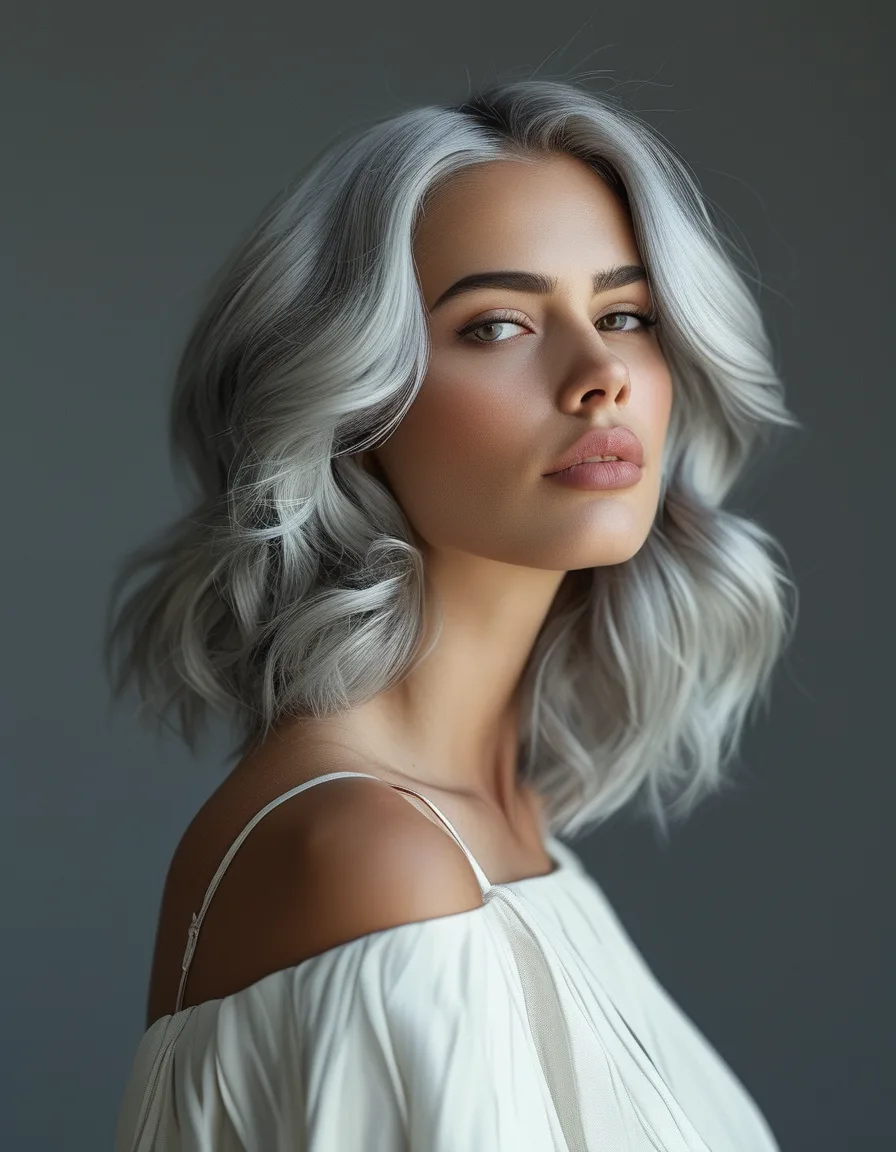
What are my options?
Four routes, and the honest answer is that none of them is correct — you’re choosing a maintenance budget as much as a look.
Ignore it. A scattering of silvers genuinely reads as expensive highlights, particularly in darker hair. Cost: zero. Effort: zero. This is a real option, not a placeholder.
Blend it. A demi-permanent color or a gloss softens the contrast without commitment — it fades gradually rather than growing out into a visible line, and it usually adds shine. Every 4–6 weeks, and it doesn’t lock you into anything.
Embrace it strategically. A deliberate silver streak has genuine main-character energy, and stylists can encourage or highlight one. This has become a real aesthetic choice rather than a compromise.
Full permanent color. Complete coverage, if that’s your joy. Just know what you’re signing up for: root touch-ups every 4–6 weeks, indefinitely. That’s the highest-maintenance route on the menu, which is fine as long as it’s a decision rather than a drift.

Myth vs Fact
Myth: Pluck one gray and seven grow back. Fact: One follicle, one hair. No recruitment mechanism exists. What you actually risk is permanently retiring that follicle.
Myth: Stress turned my hair gray this year. Fact: Stress plays a minor and possibly reversible role. Your timeline was largely set by genetics long before the year in question.
Myth: Gray hair is coarser and more wiry by nature. Fact: Gray hair does tend to feel drier because the same follicle changes also reduce sebum production, and it’s often more porous. Conditioner and a hair oil address most of it — the texture isn’t inherently wiry, it’s dry.
Myth: Supplements can reverse gray hair. Fact: Only if you have a genuine deficiency, notably B12, and even then reversal is inconsistent. There’s no supplement that restores pigment in a normally graying follicle, whatever the packaging says.
Myth: Once you start coloring, you can never stop. Fact: You can, and the grow-out is easier than it used to be — stylists now offer specific blending and transition techniques that avoid a hard demarcation line.
FAQ
Is it normal to get gray hair at 30?
Yes. Most people of European descent find their first grays in their mid-30s, and finding one or several a few years earlier sits well within normal variation. The strongest predictor is family history — parents who grayed early usually means you will too.
Does plucking gray hairs make more grow back?
No. Each follicle grows one hair and plucking it doesn’t affect neighboring follicles. The real risk is that repeated plucking damages the follicle enough to stop producing hair permanently, so trimming with small scissors is the safer way to remove one.
Can gray hair turn back to its original color?
Rarely, and generally only when there’s a reversible cause such as a B12 deficiency, a thyroid issue, or possibly acute stress. Genetically driven graying is permanent, because the follicle’s pigment-producing cells have stopped working rather than paused.
TL;DR:
- Blame genetics — your parents’ timeline is your best forecast.
- Stress plays a minor role at most; graying in your thirties is normal, not a health signal.
- Plucking doesn’t multiply grays but can permanently damage the follicle. Use scissors.
- Four options: ignore, blend with a gloss, embrace a streak, or color fully — the real difference is maintenance budget.
- Gray hair is drier, not coarser. Condition it and it behaves.
Keep Reading
This article is for general informational and styling purposes only. Fit, sizing, and product availability may vary.